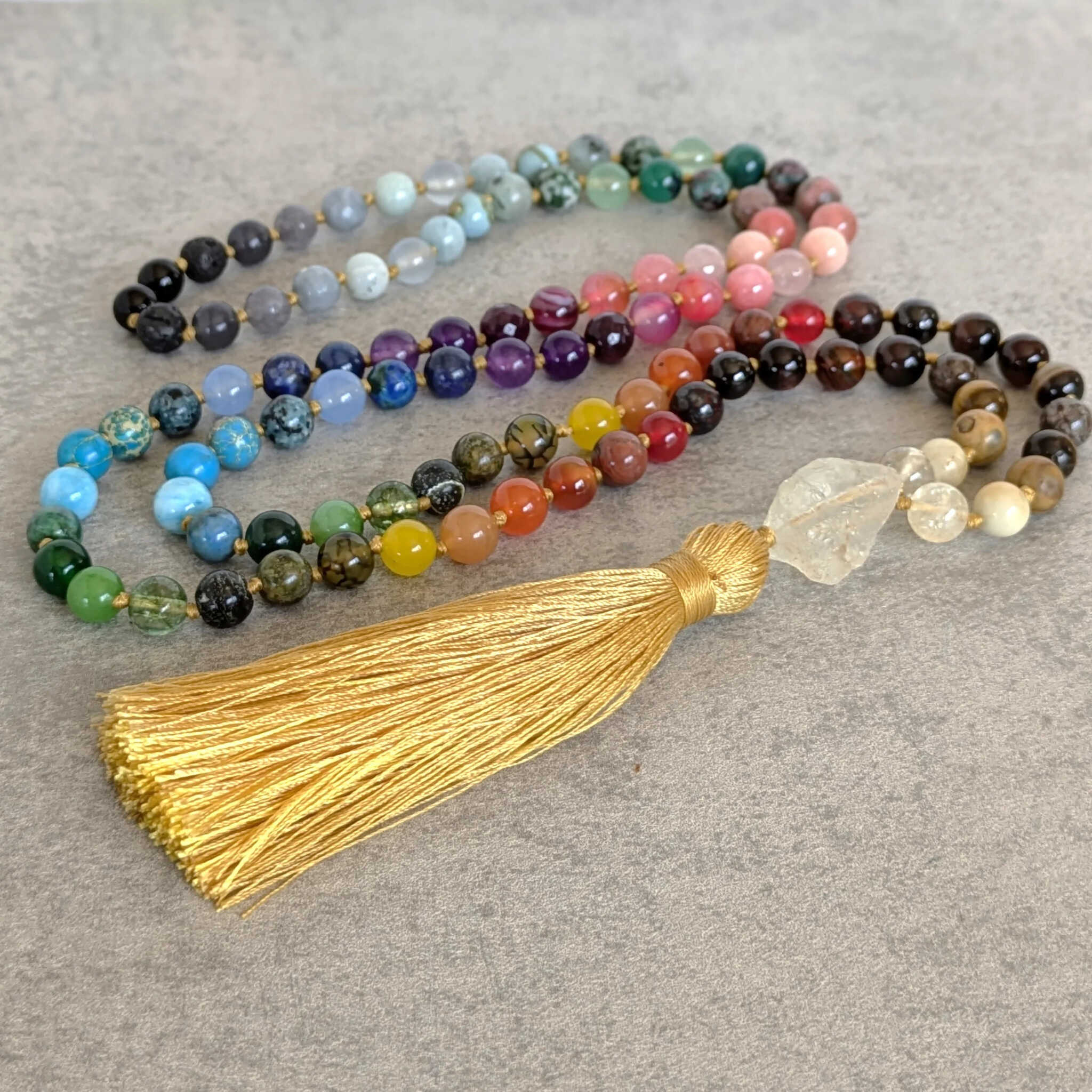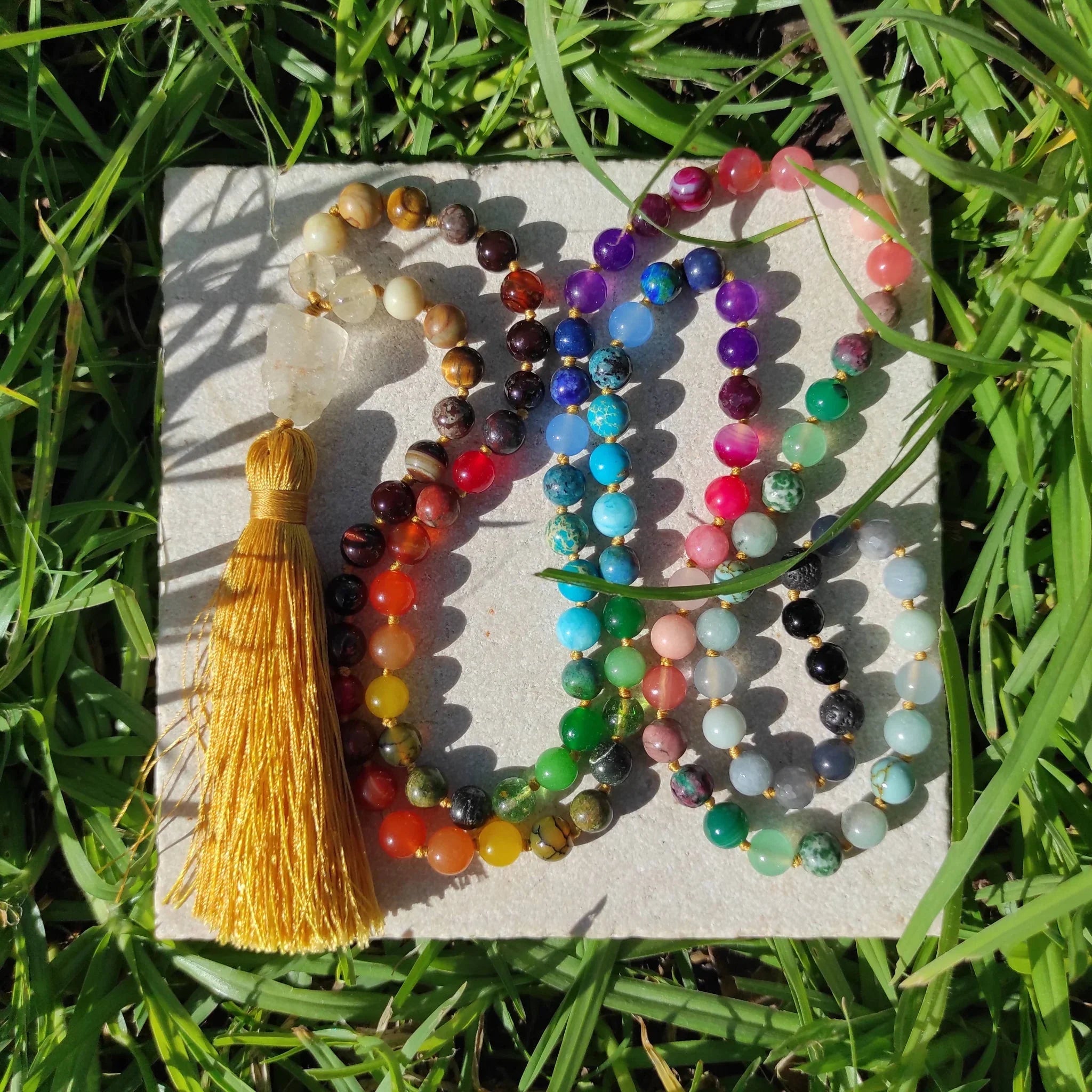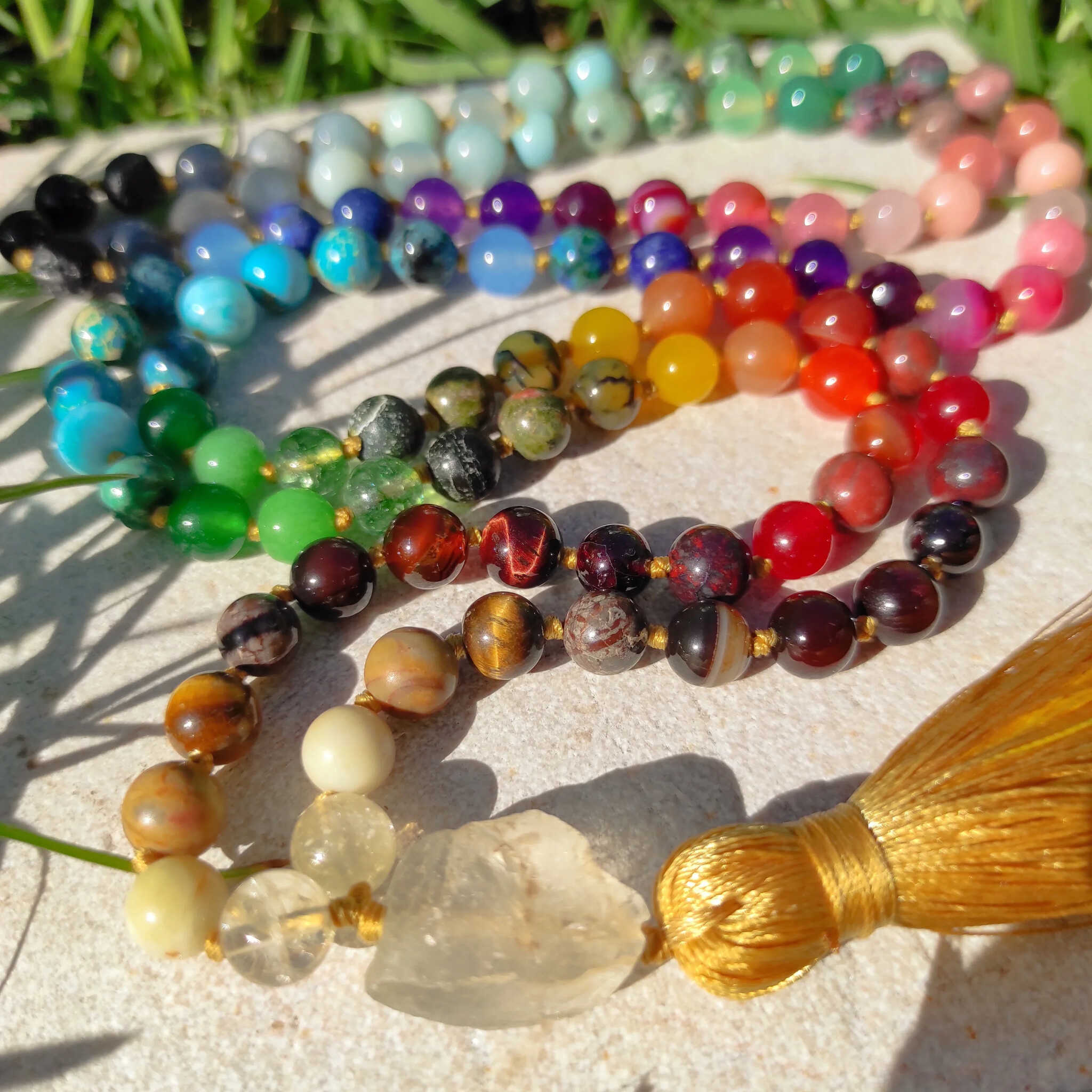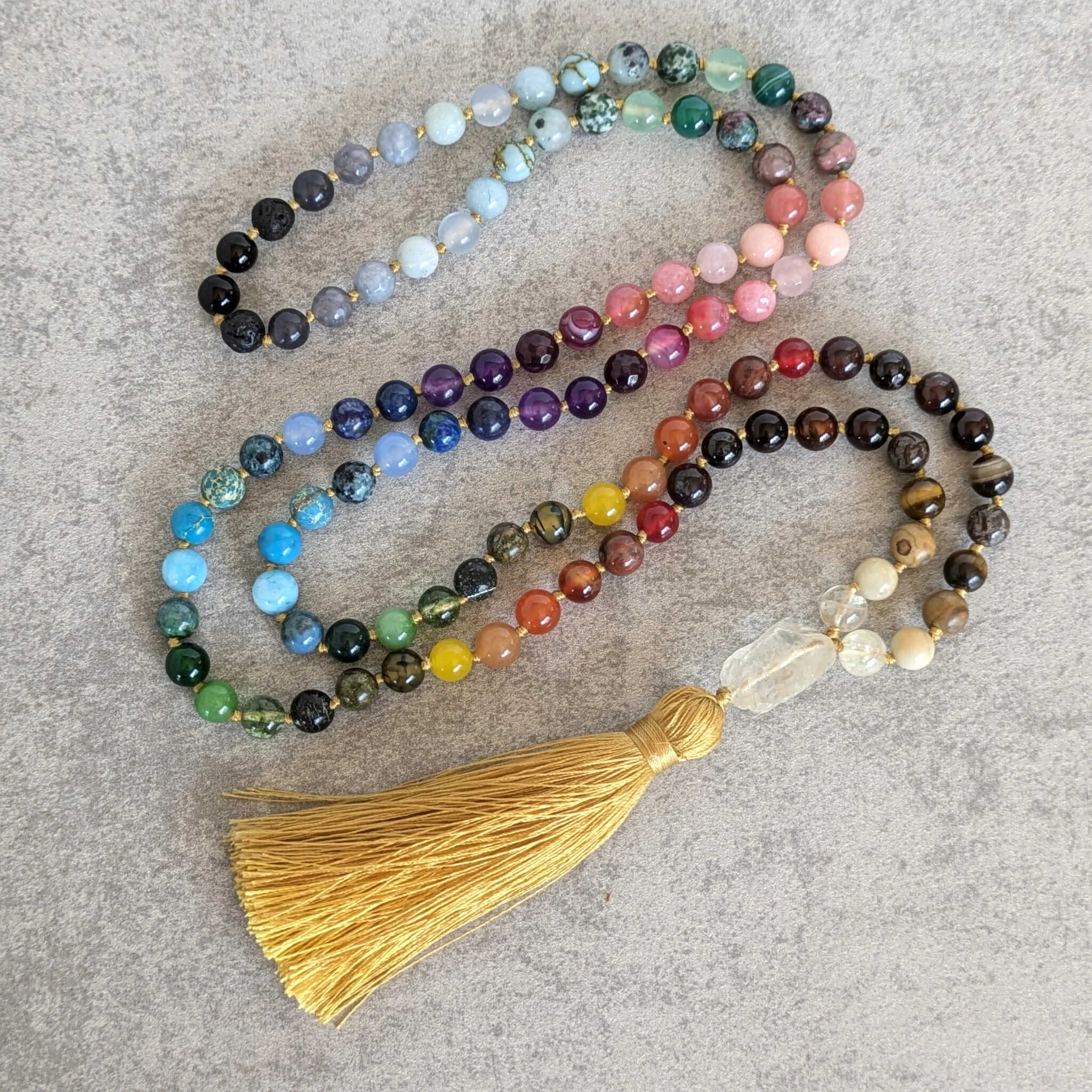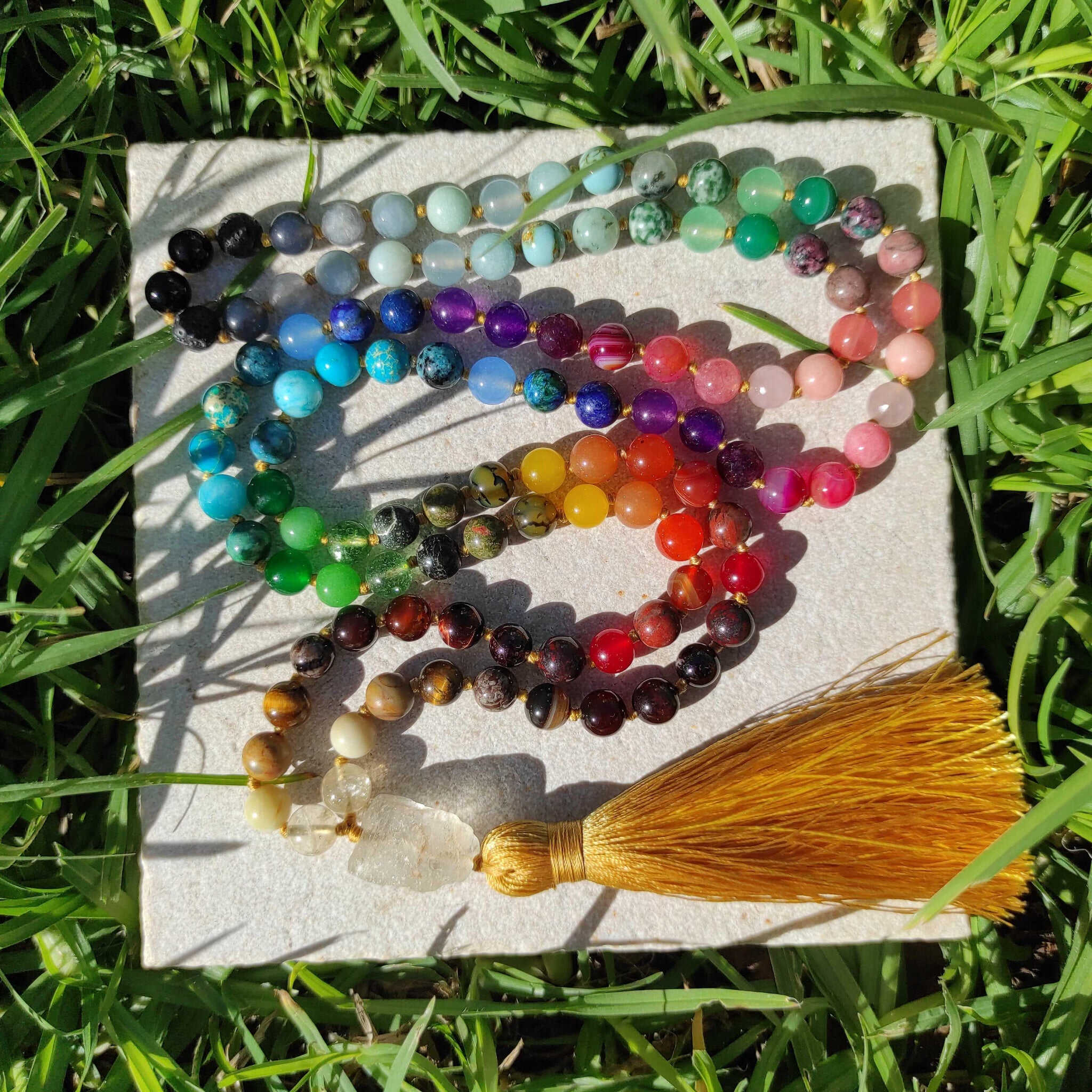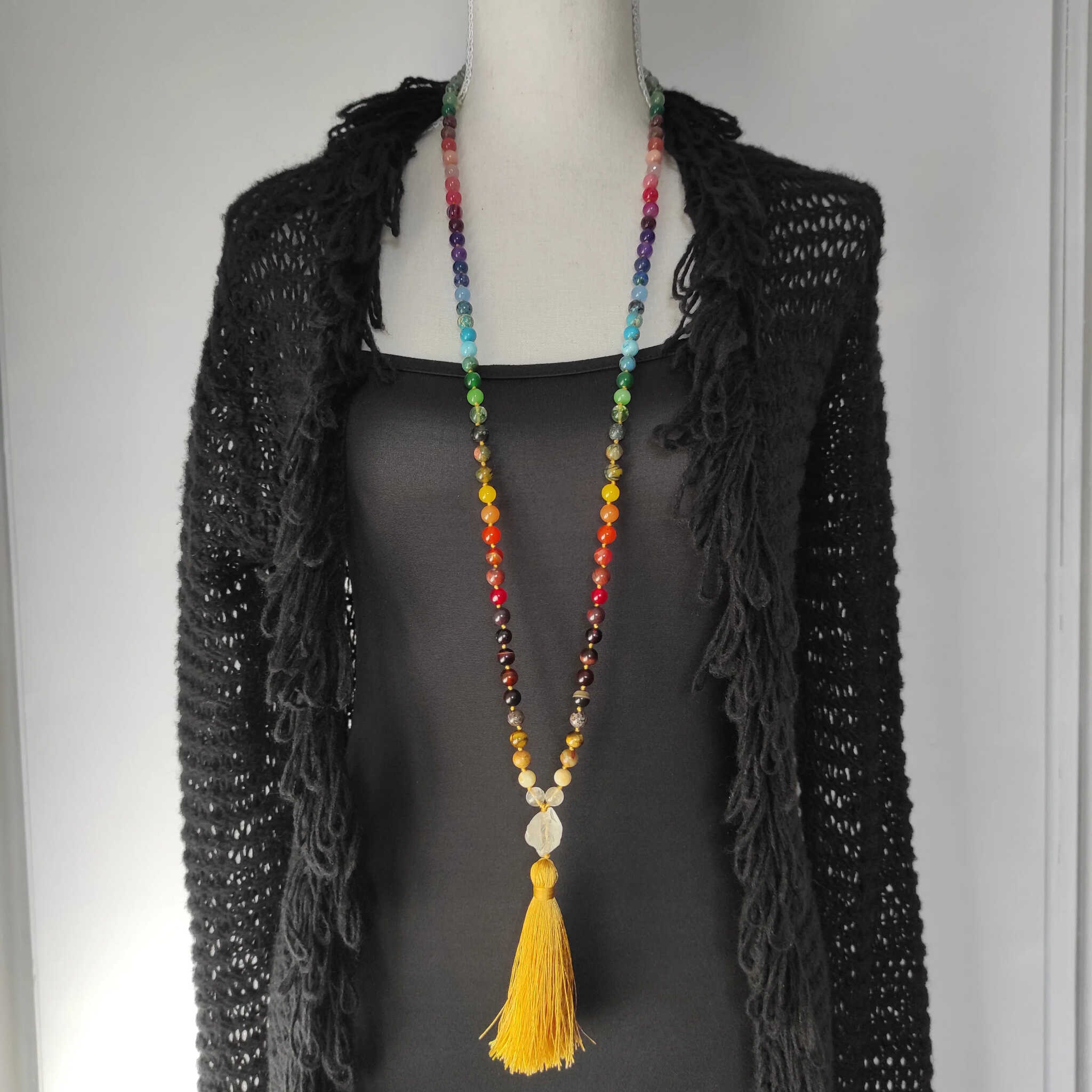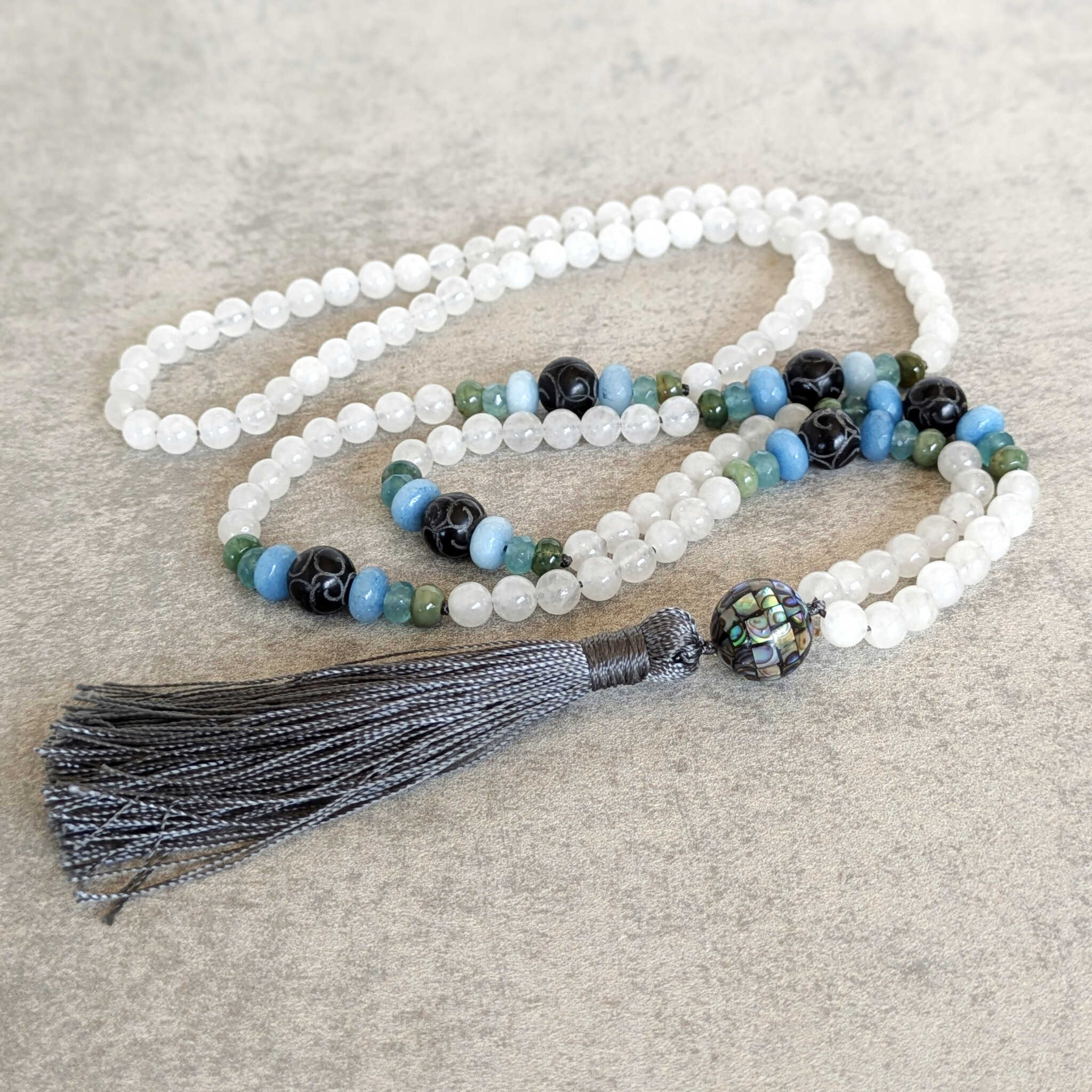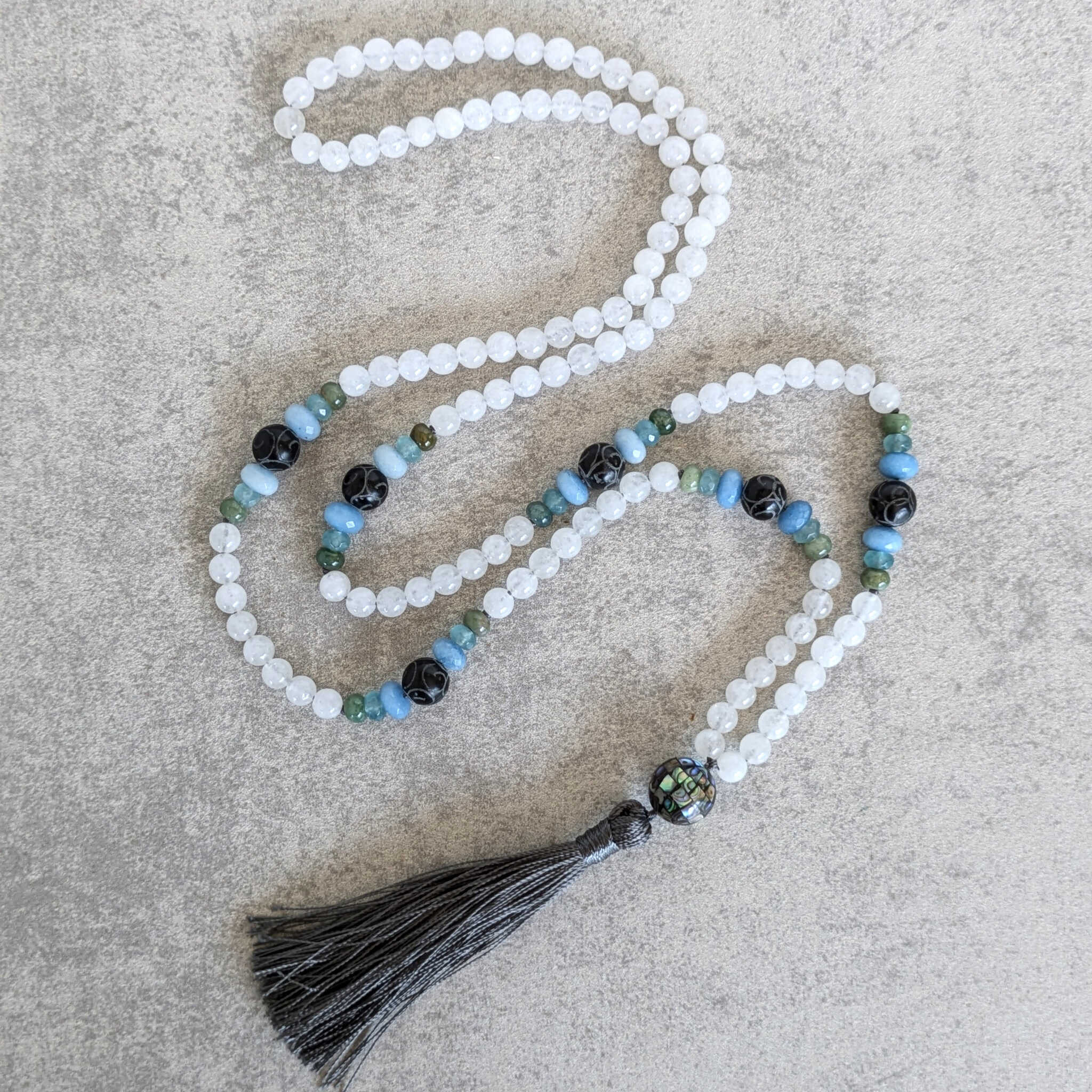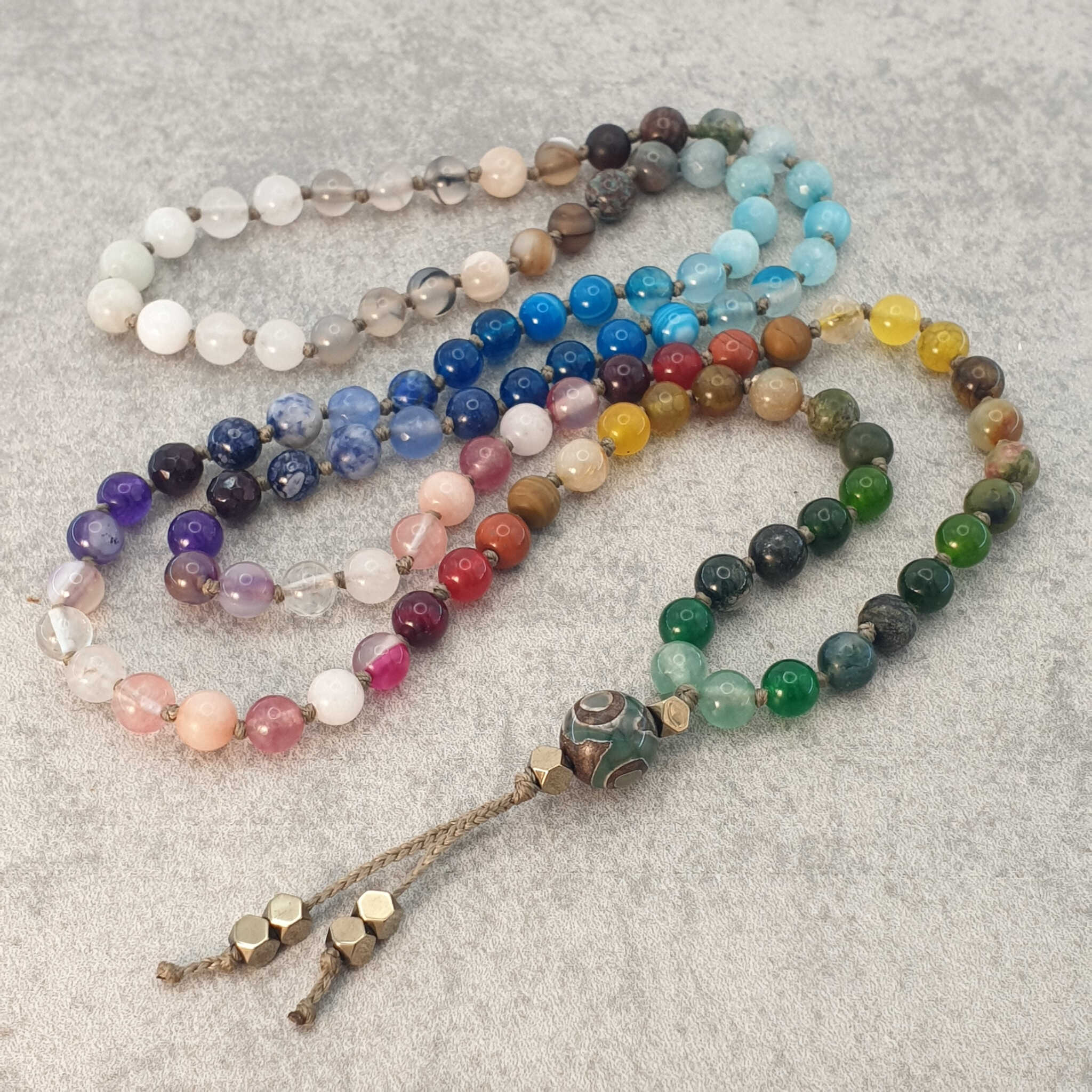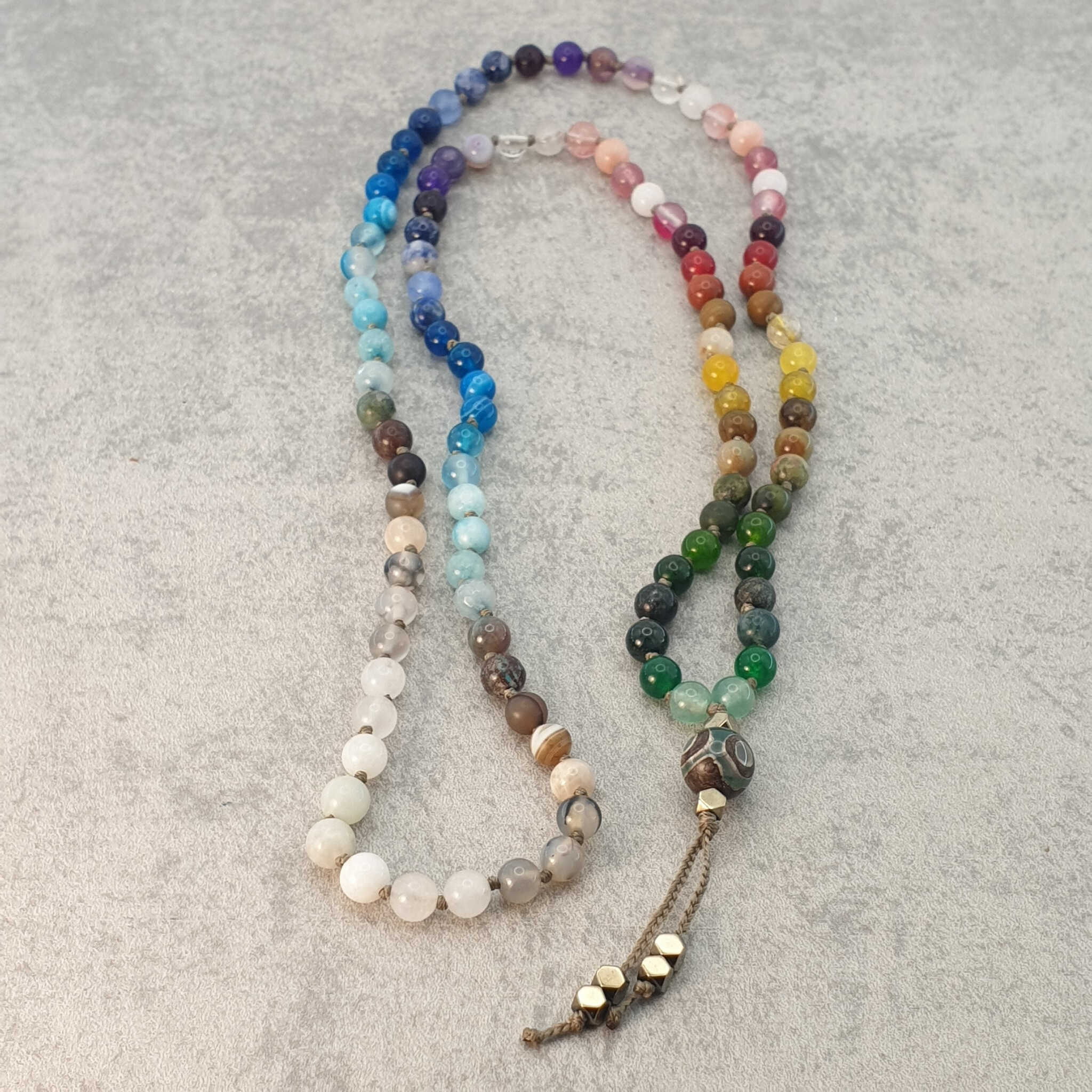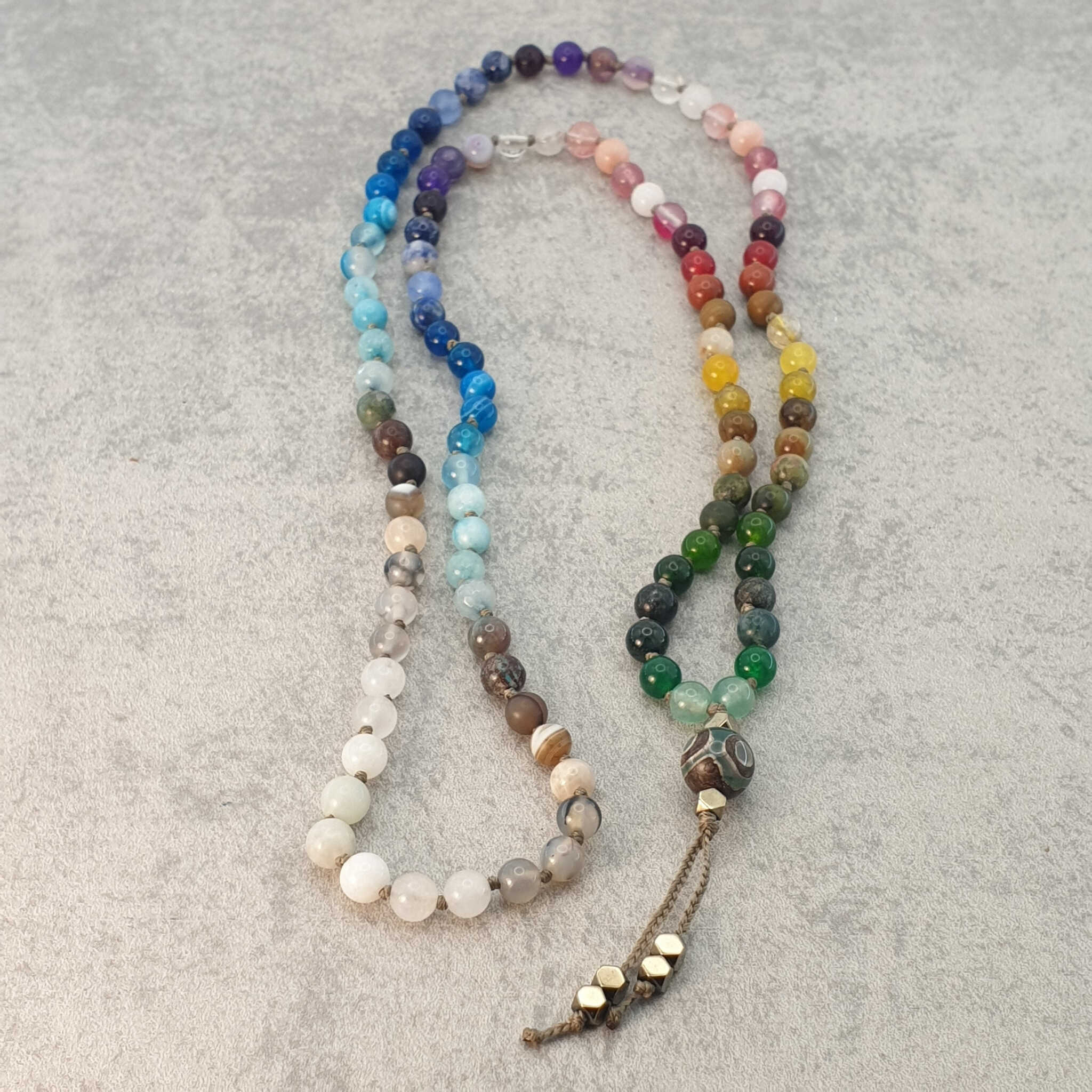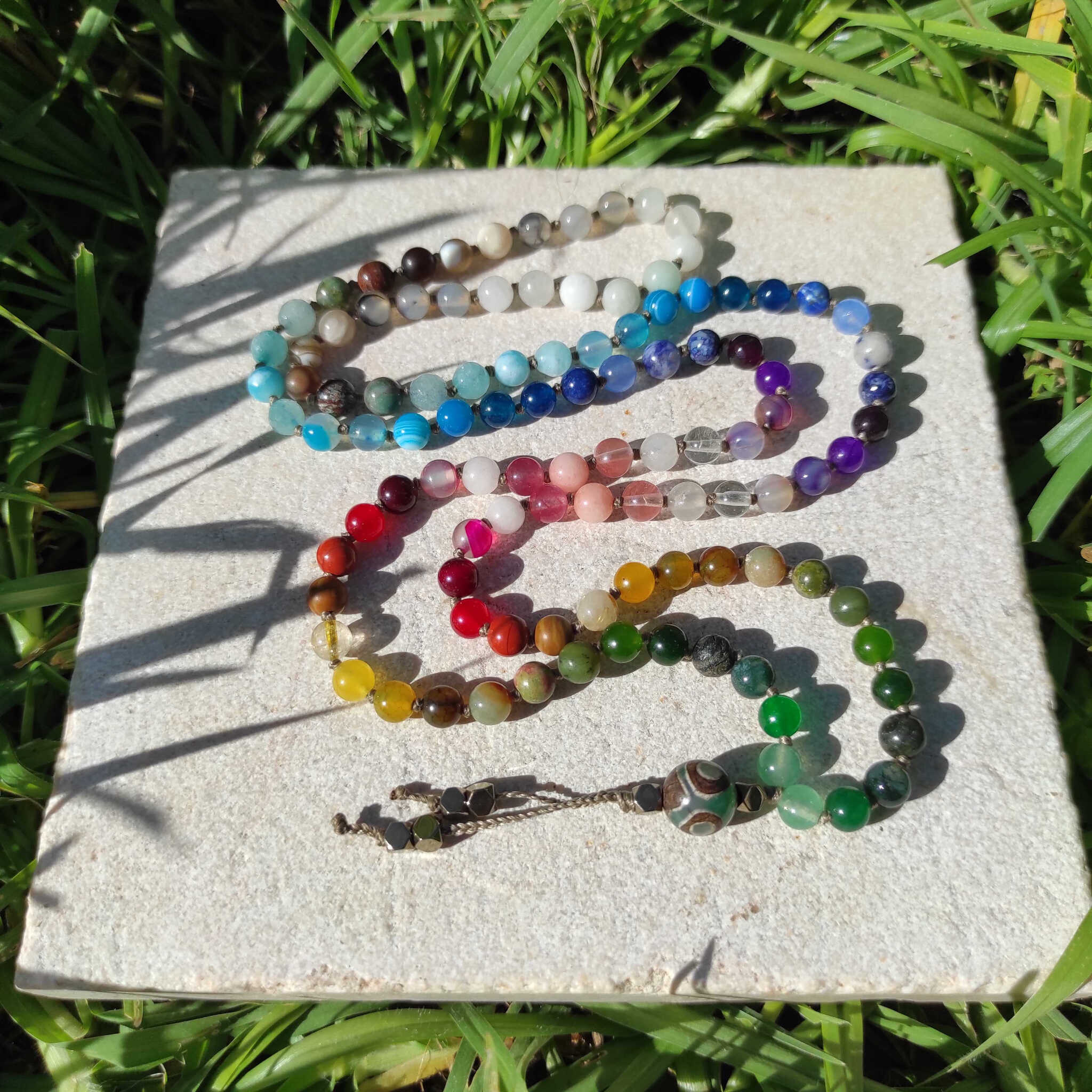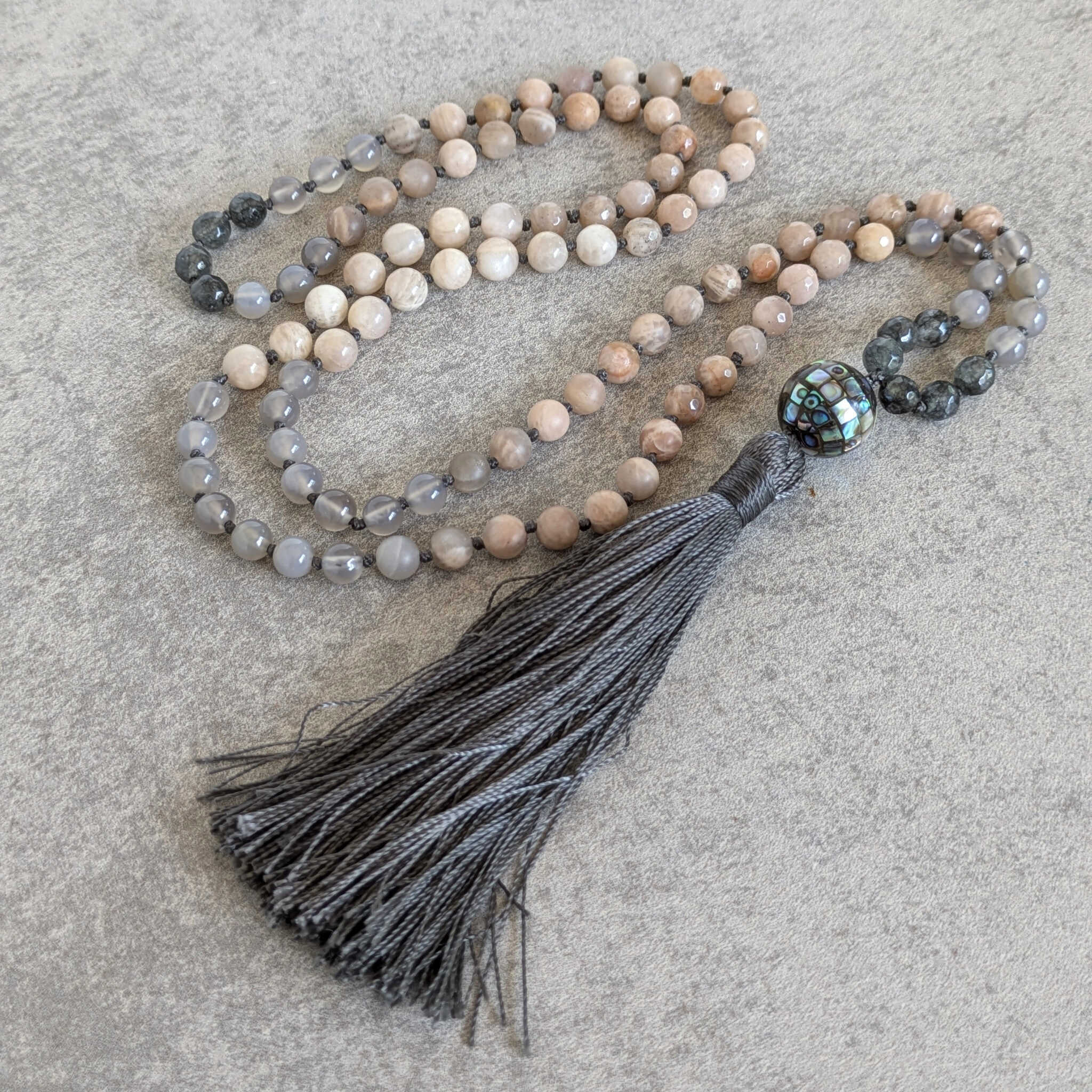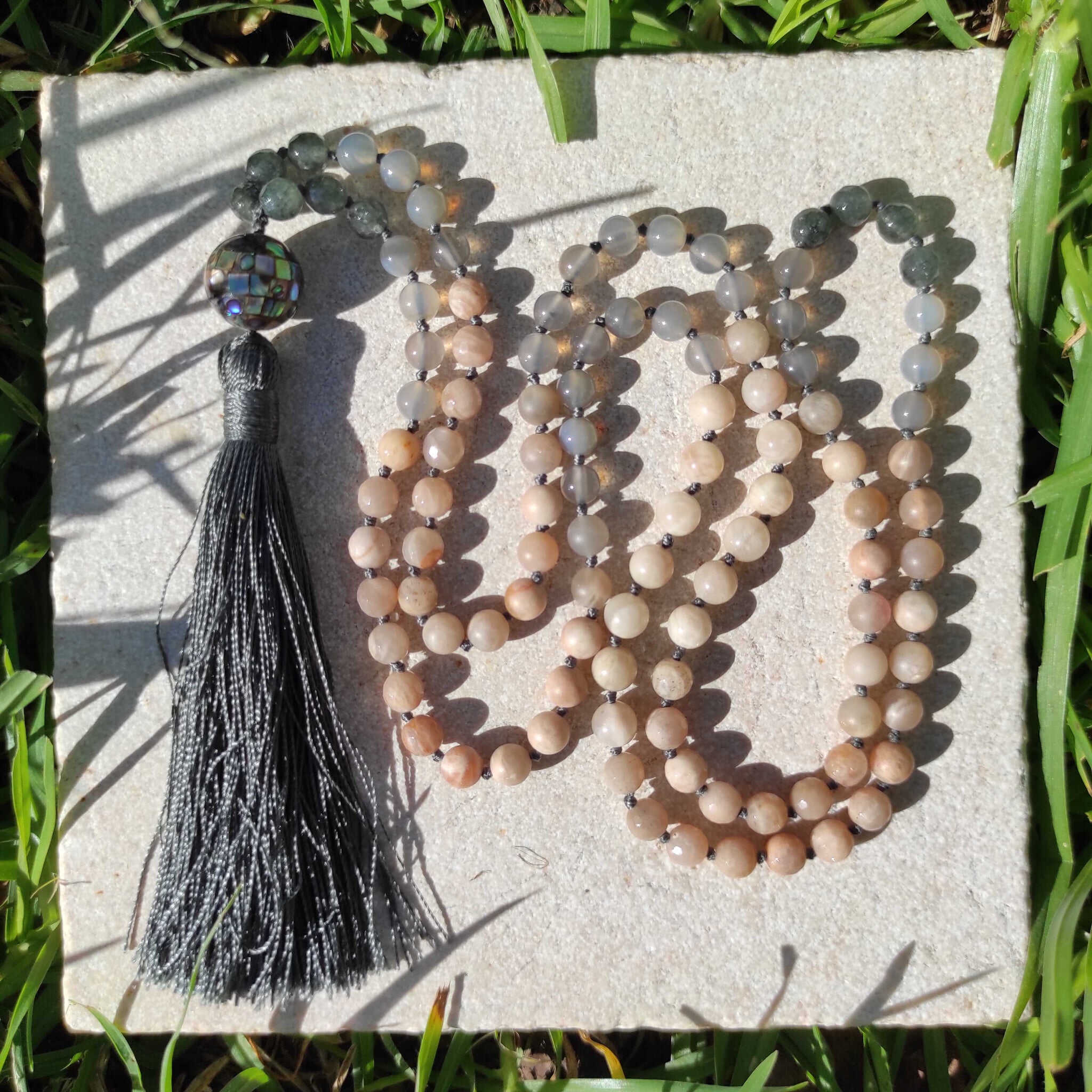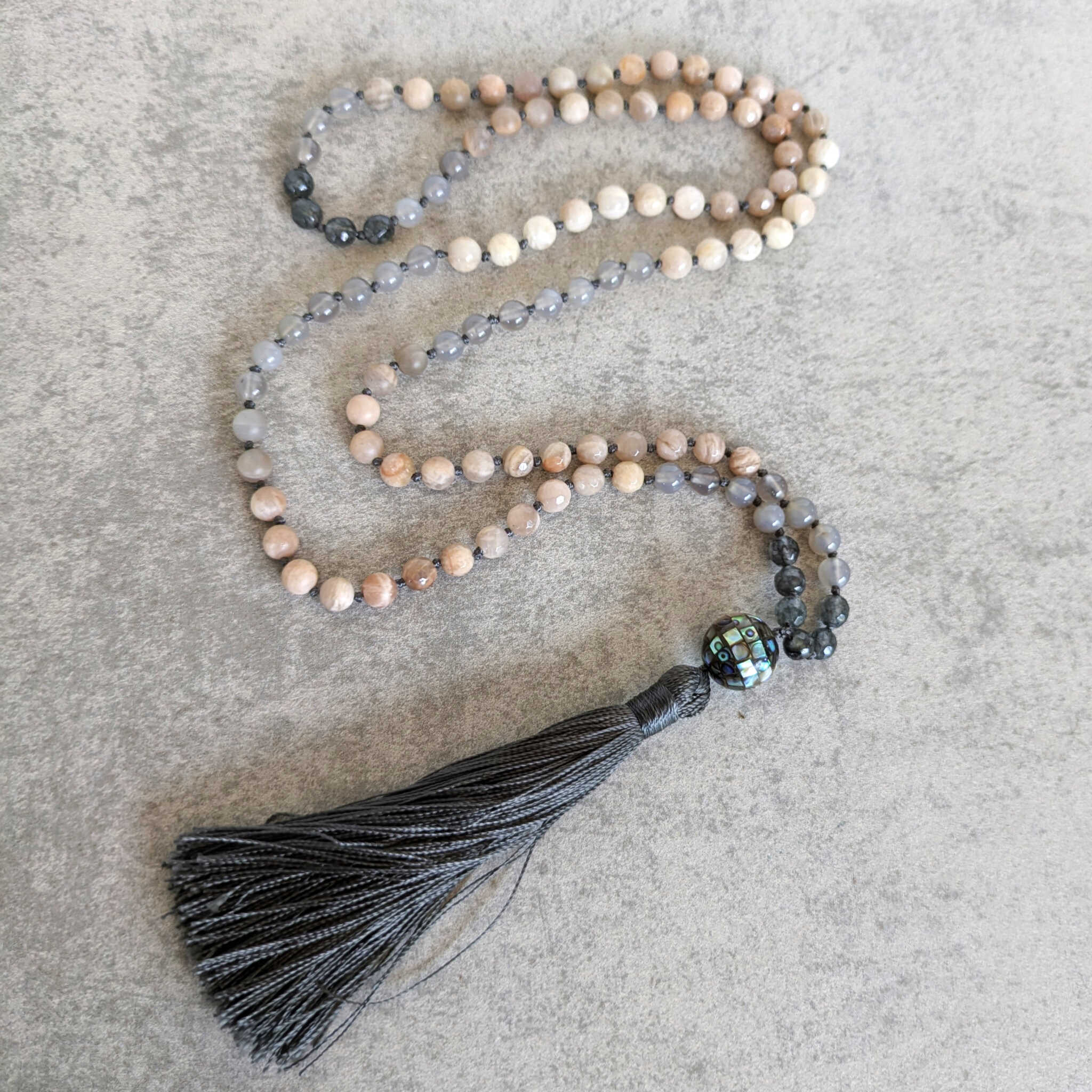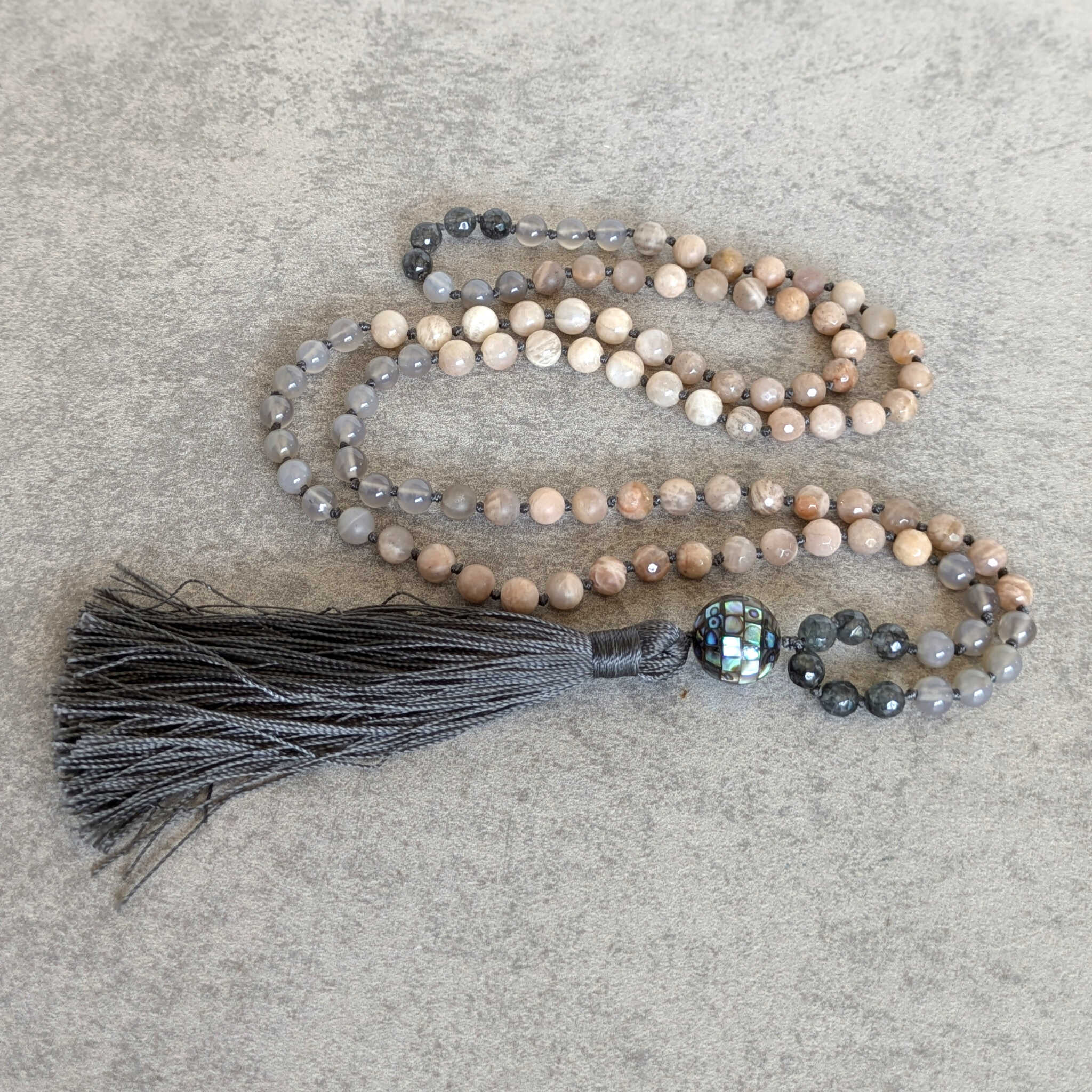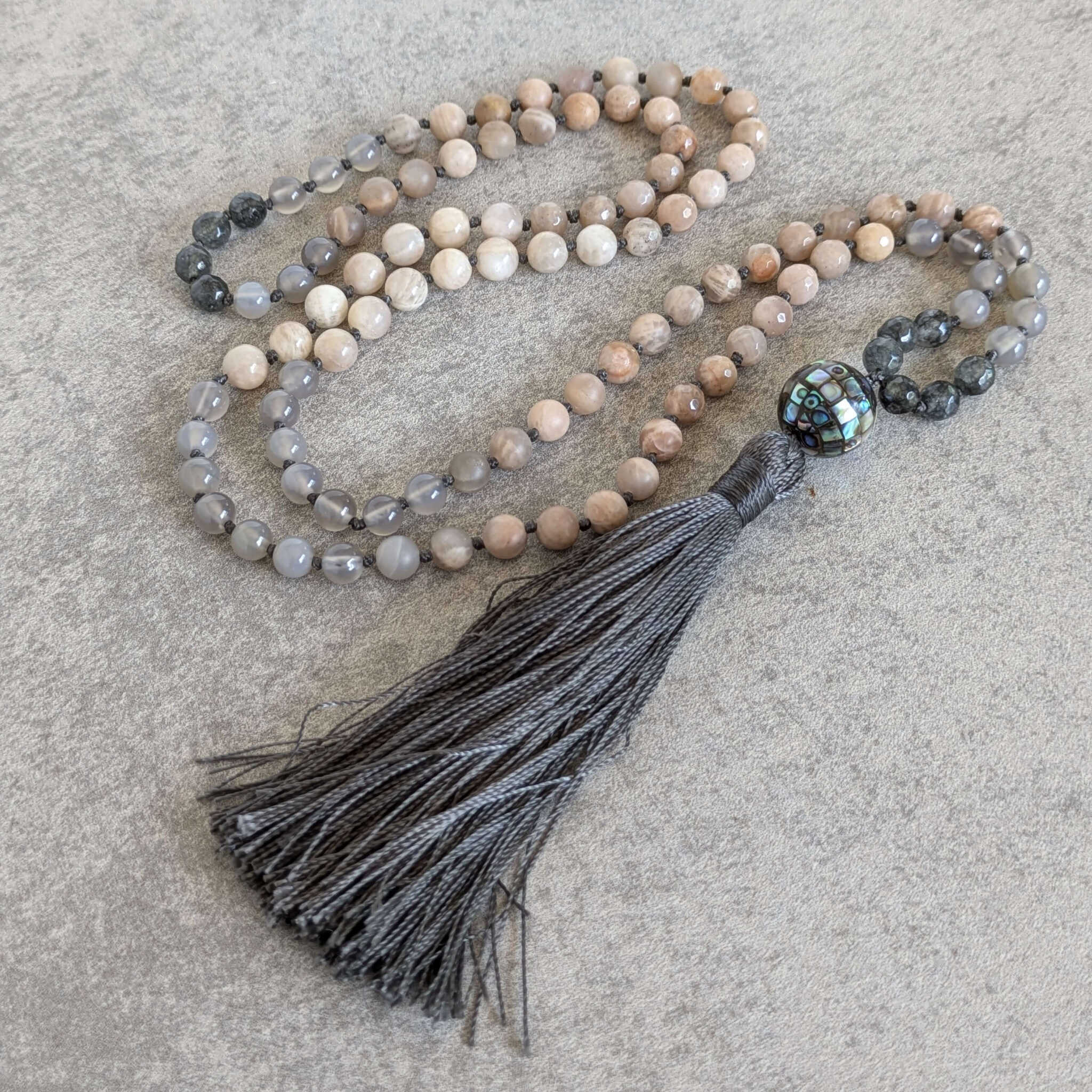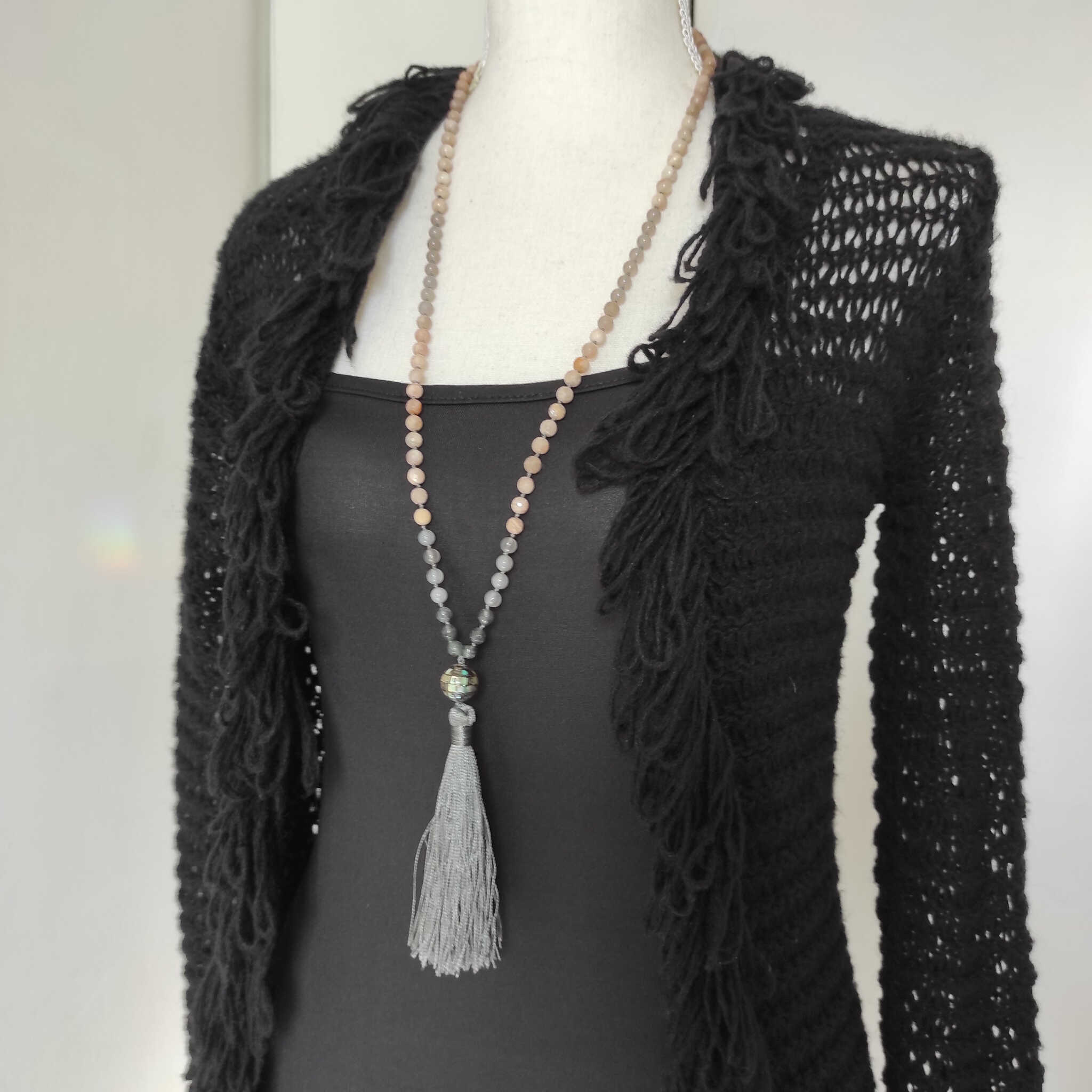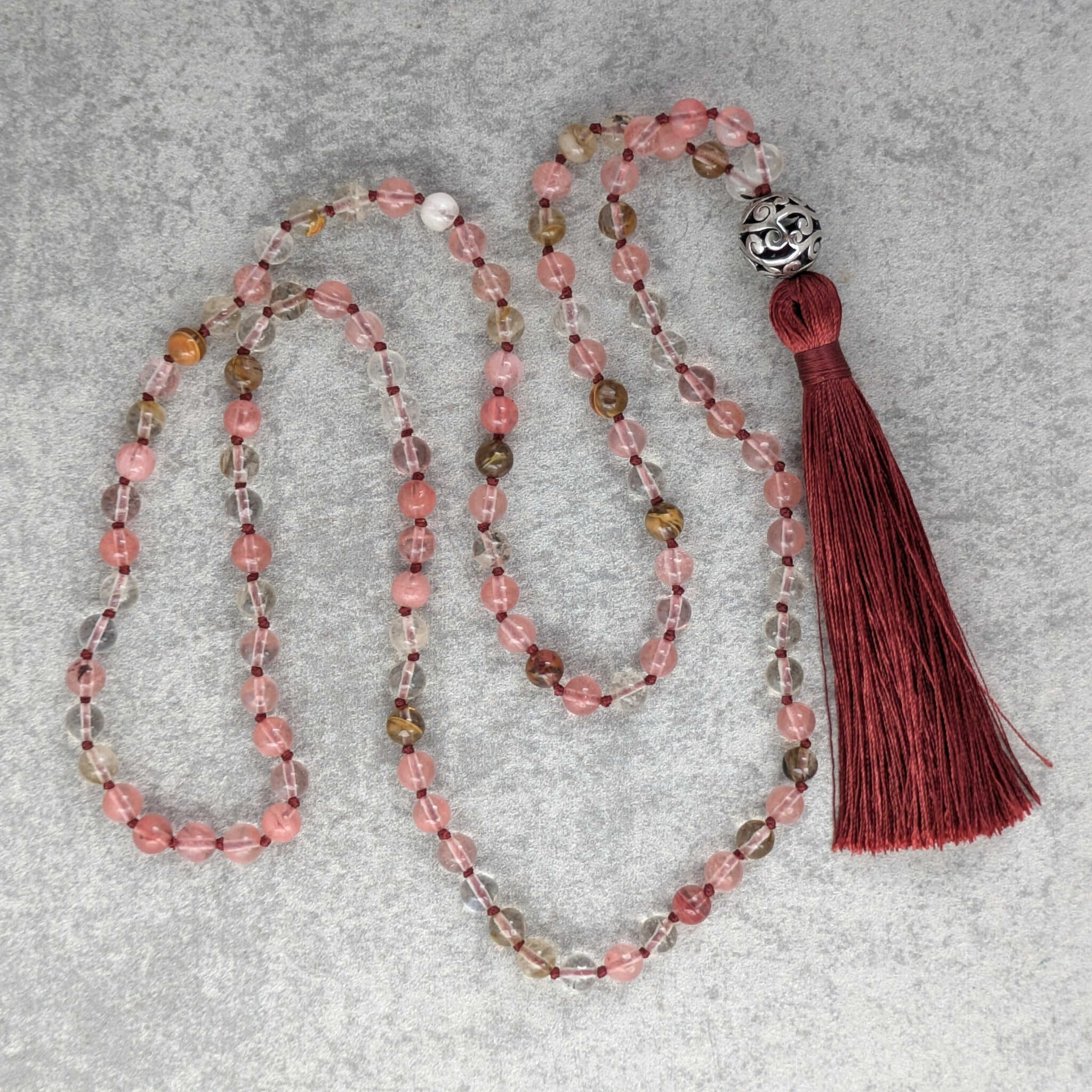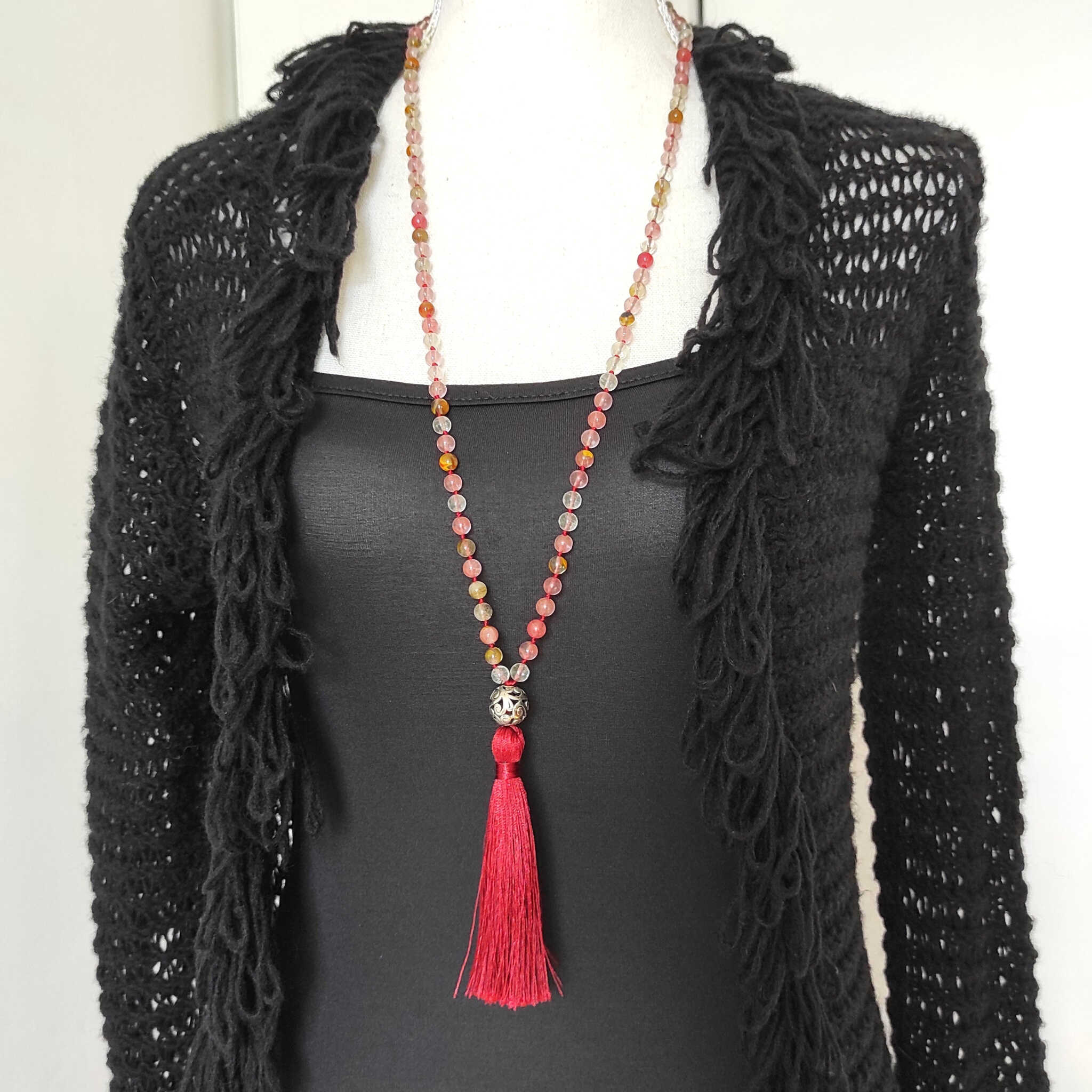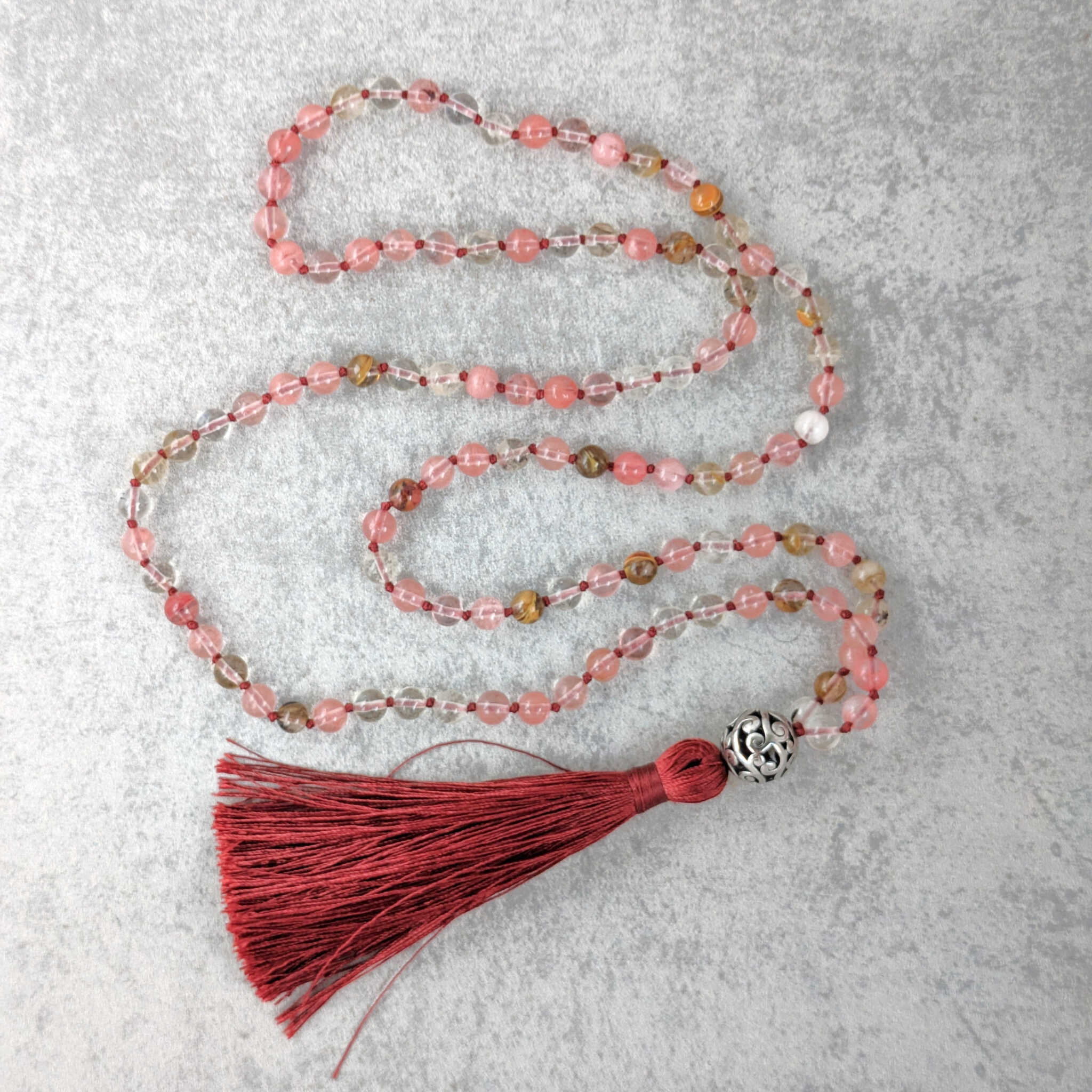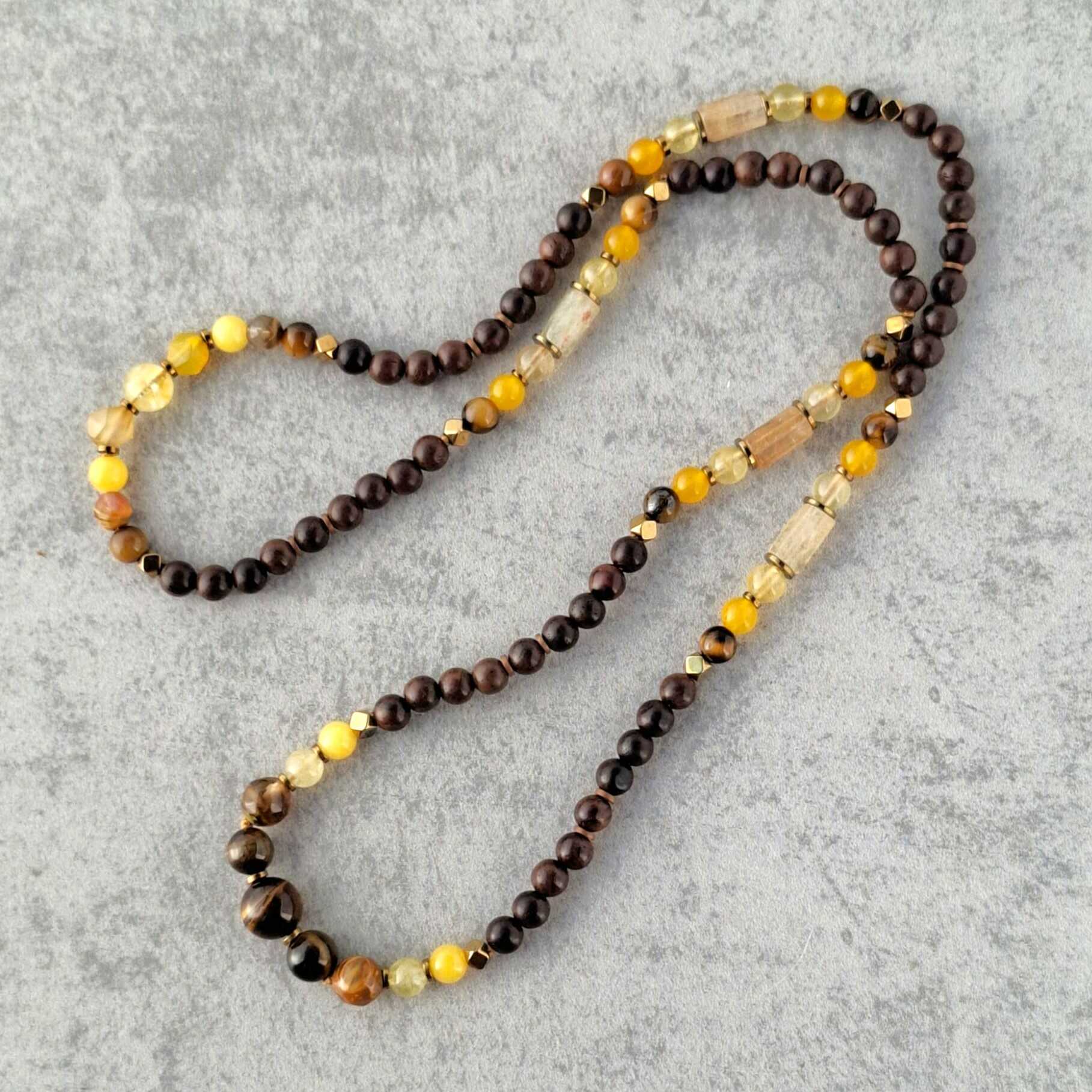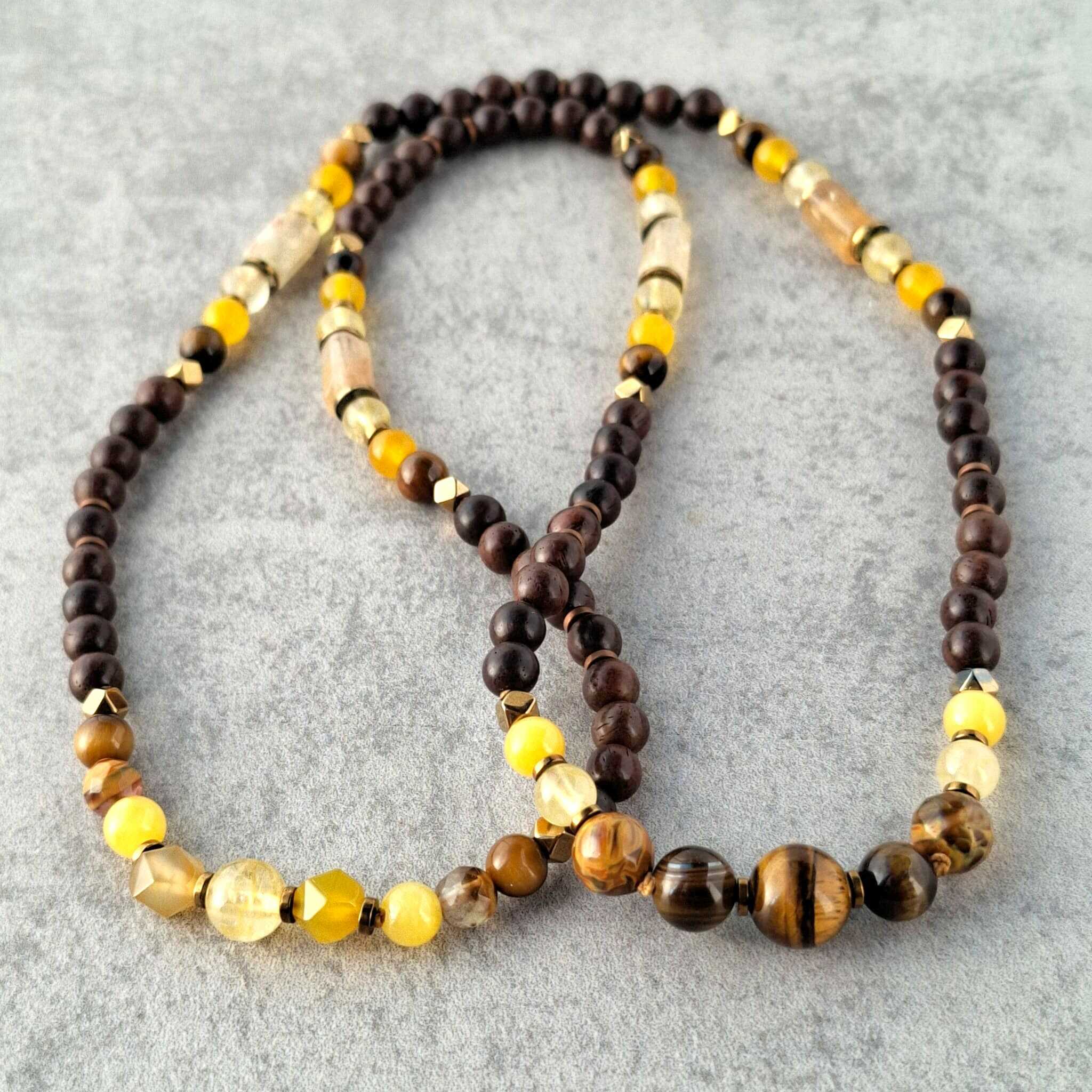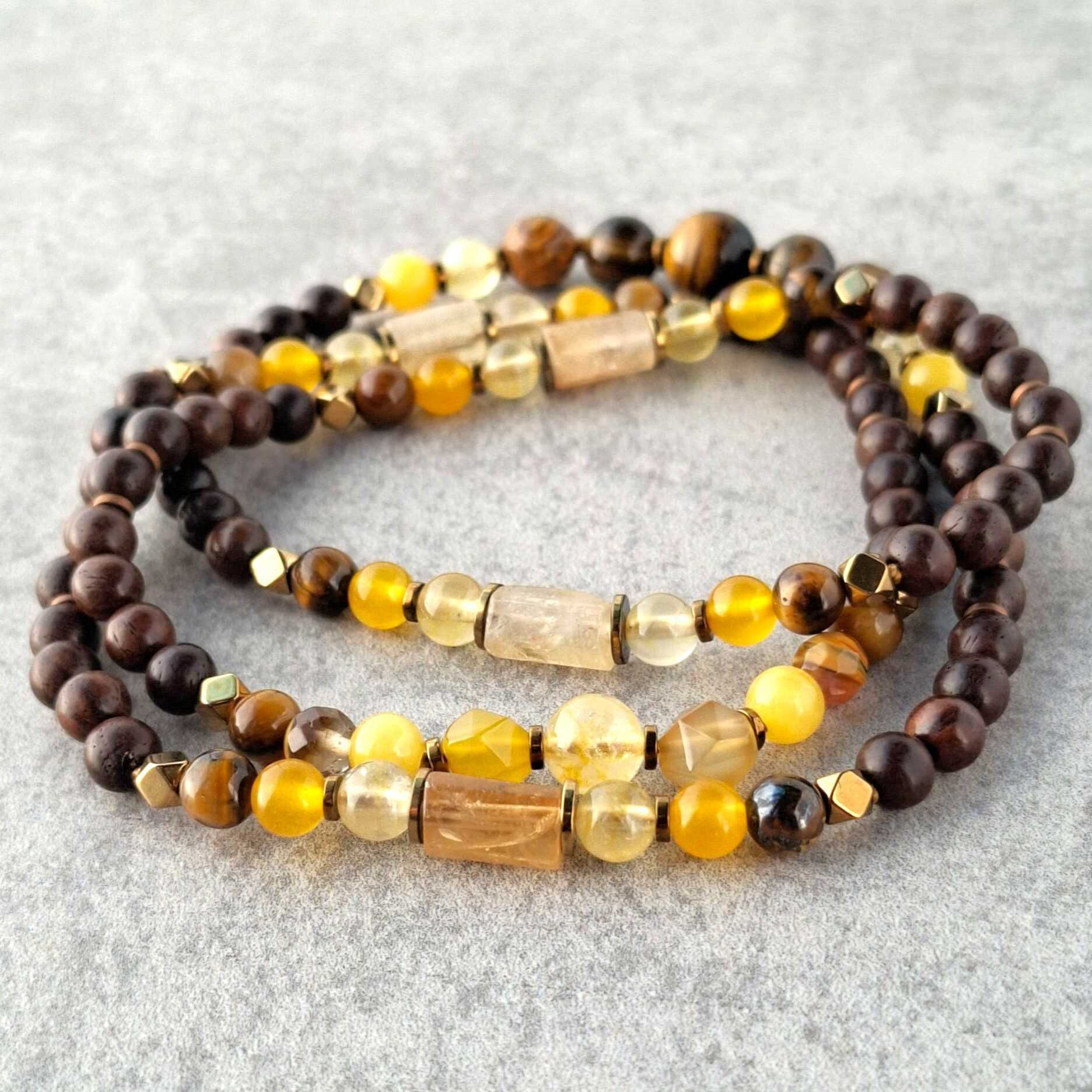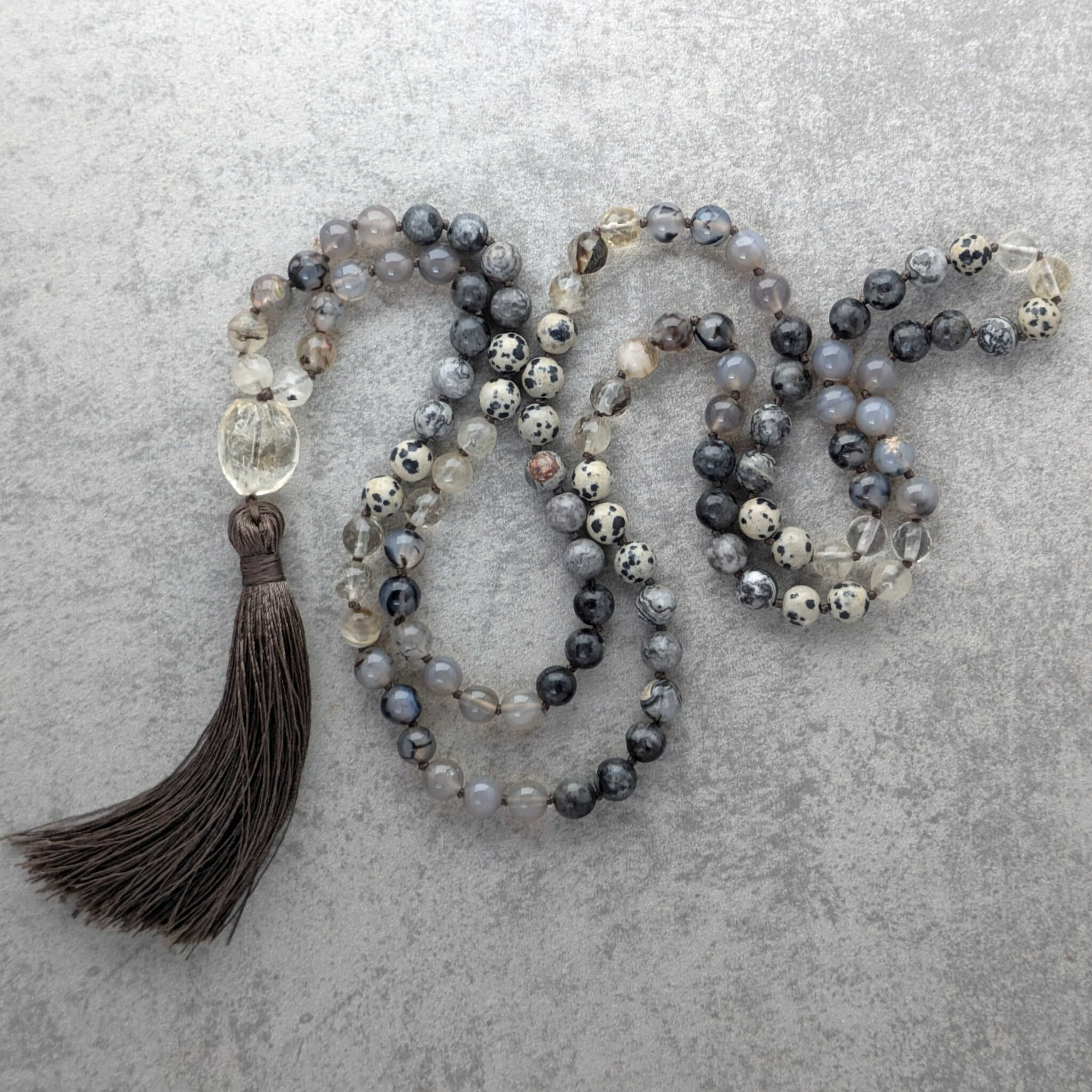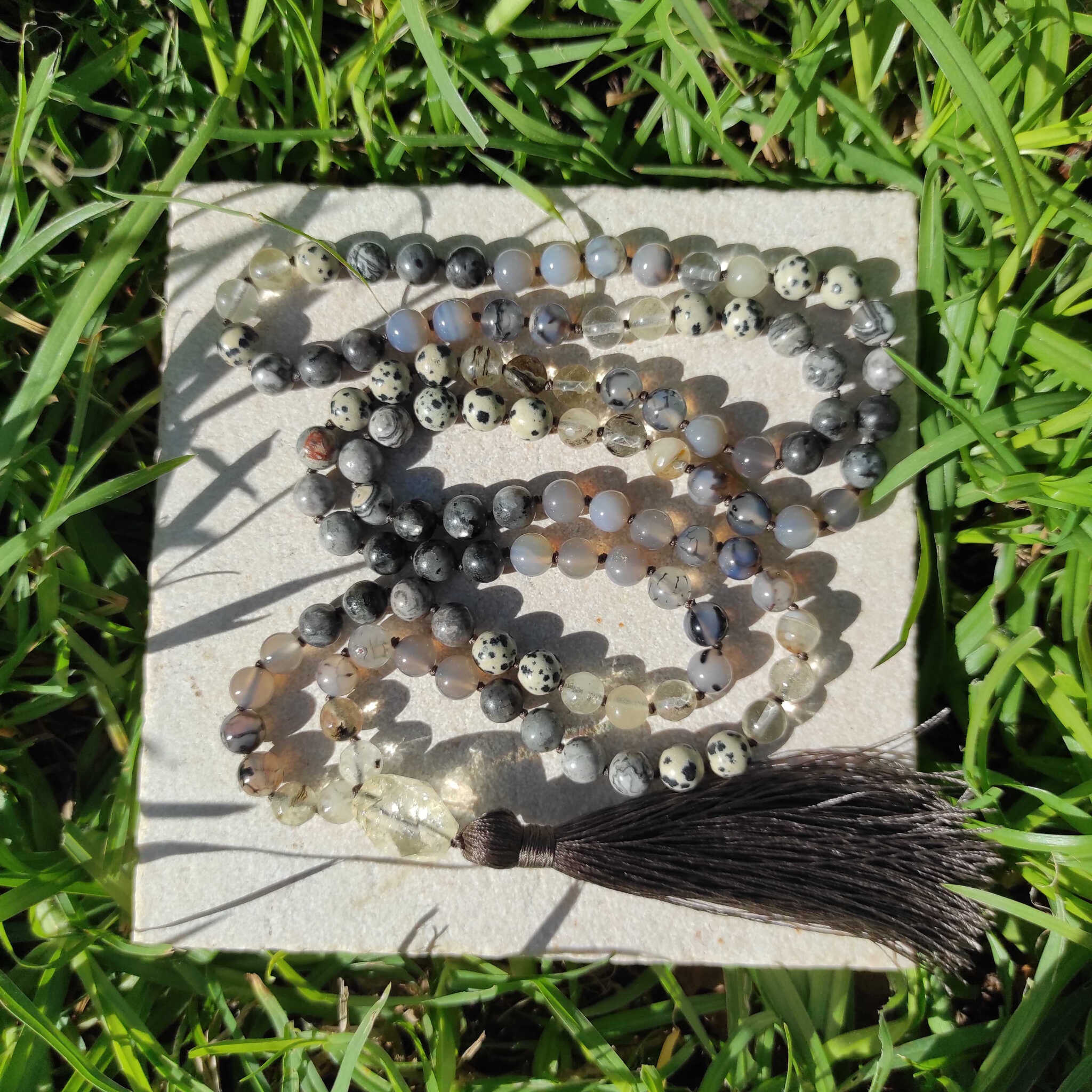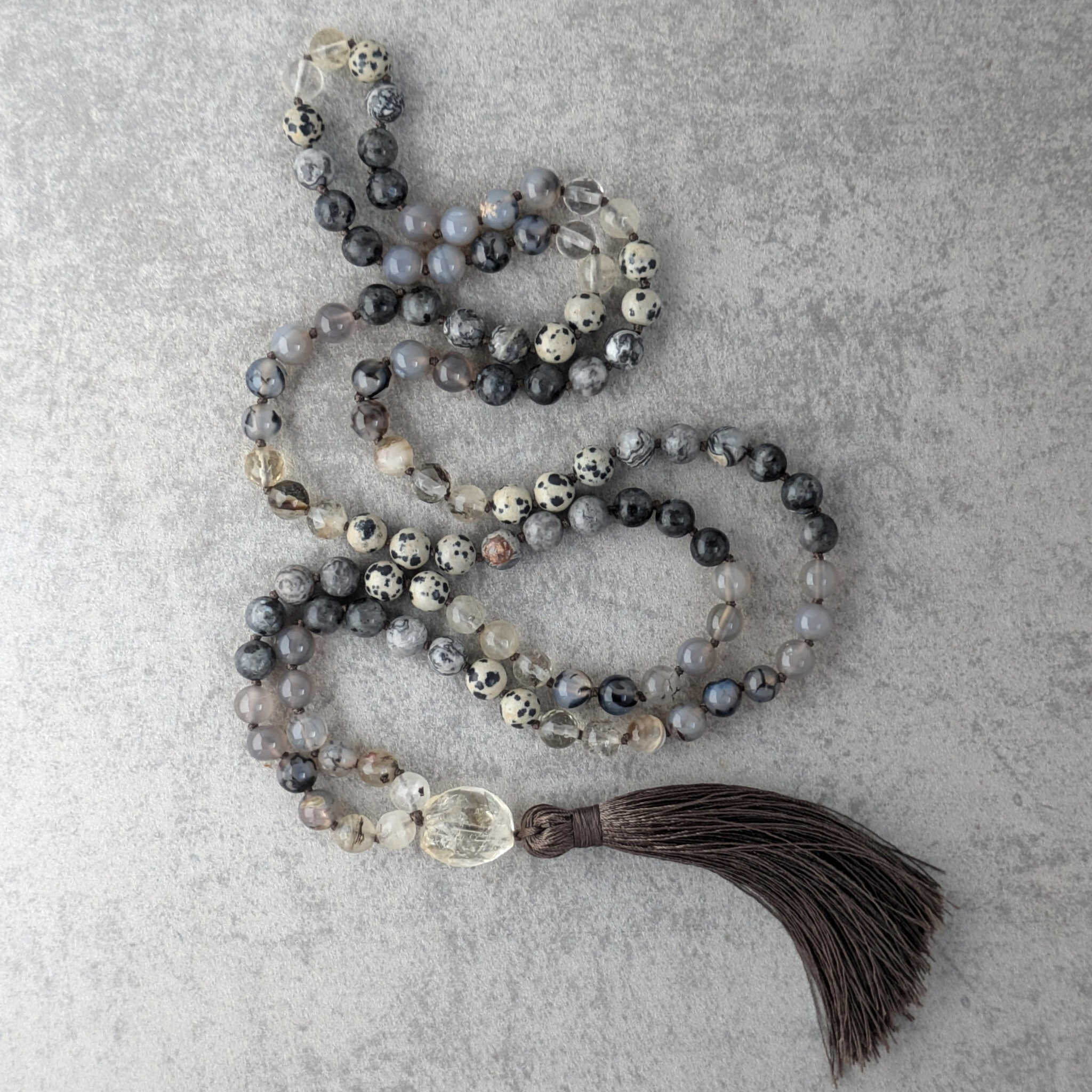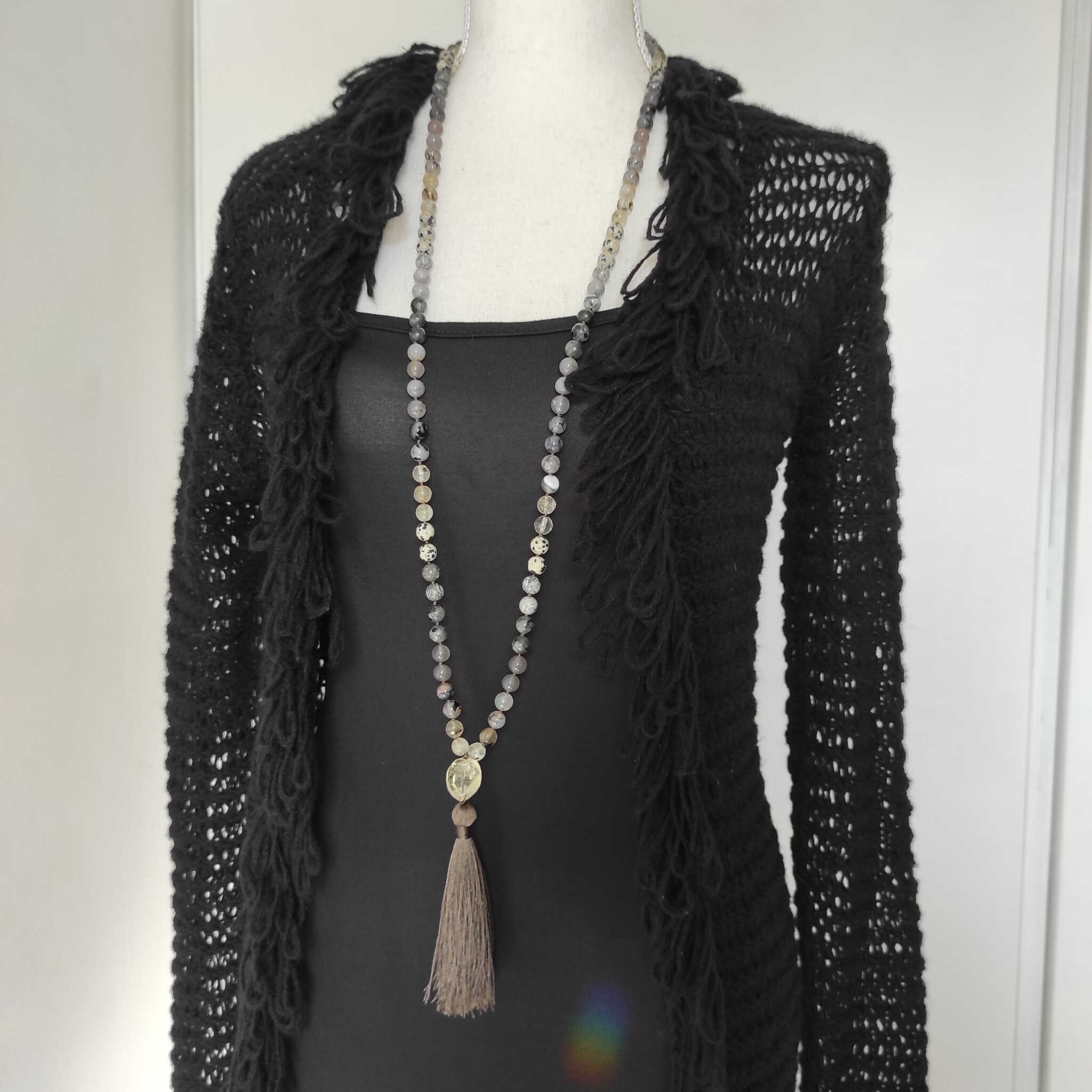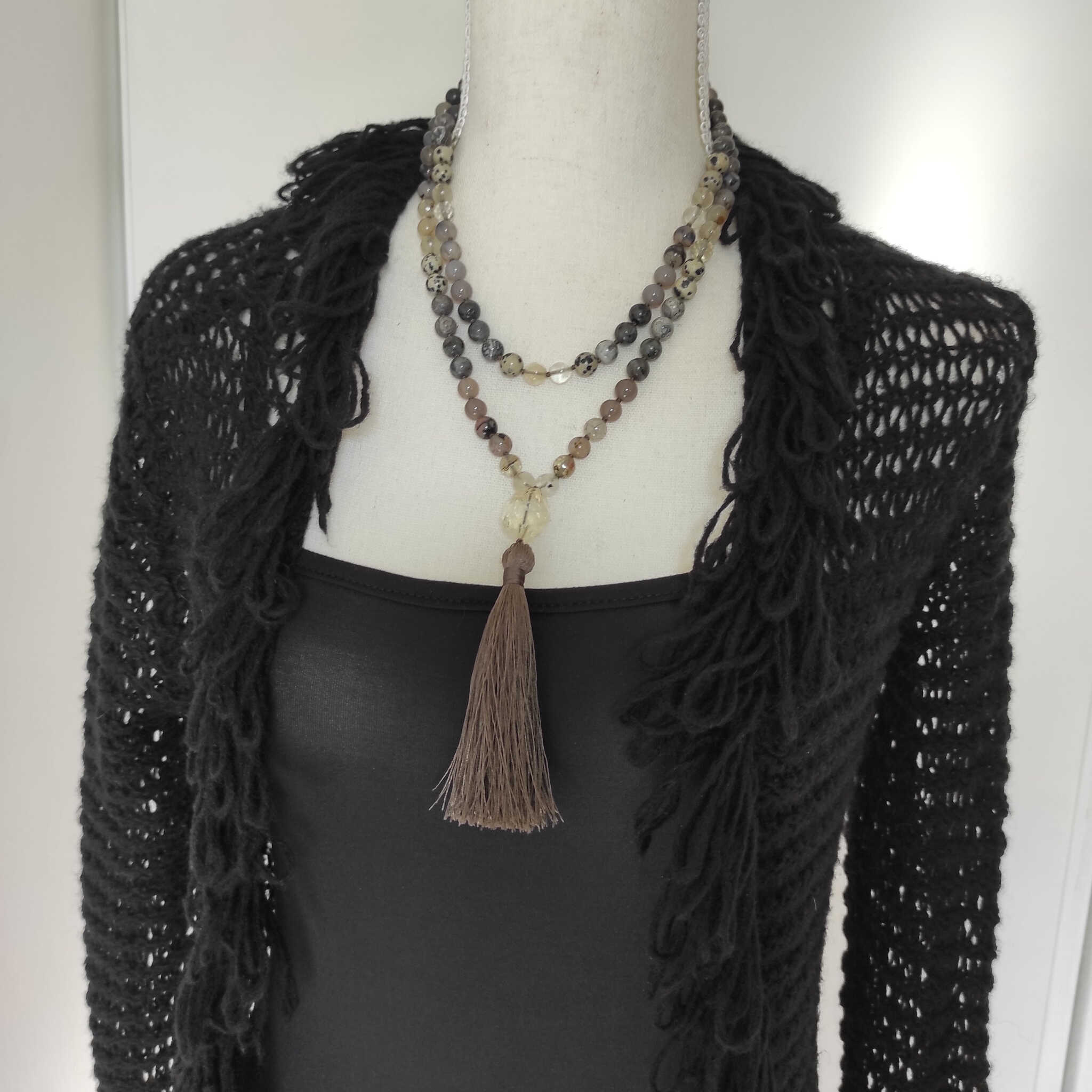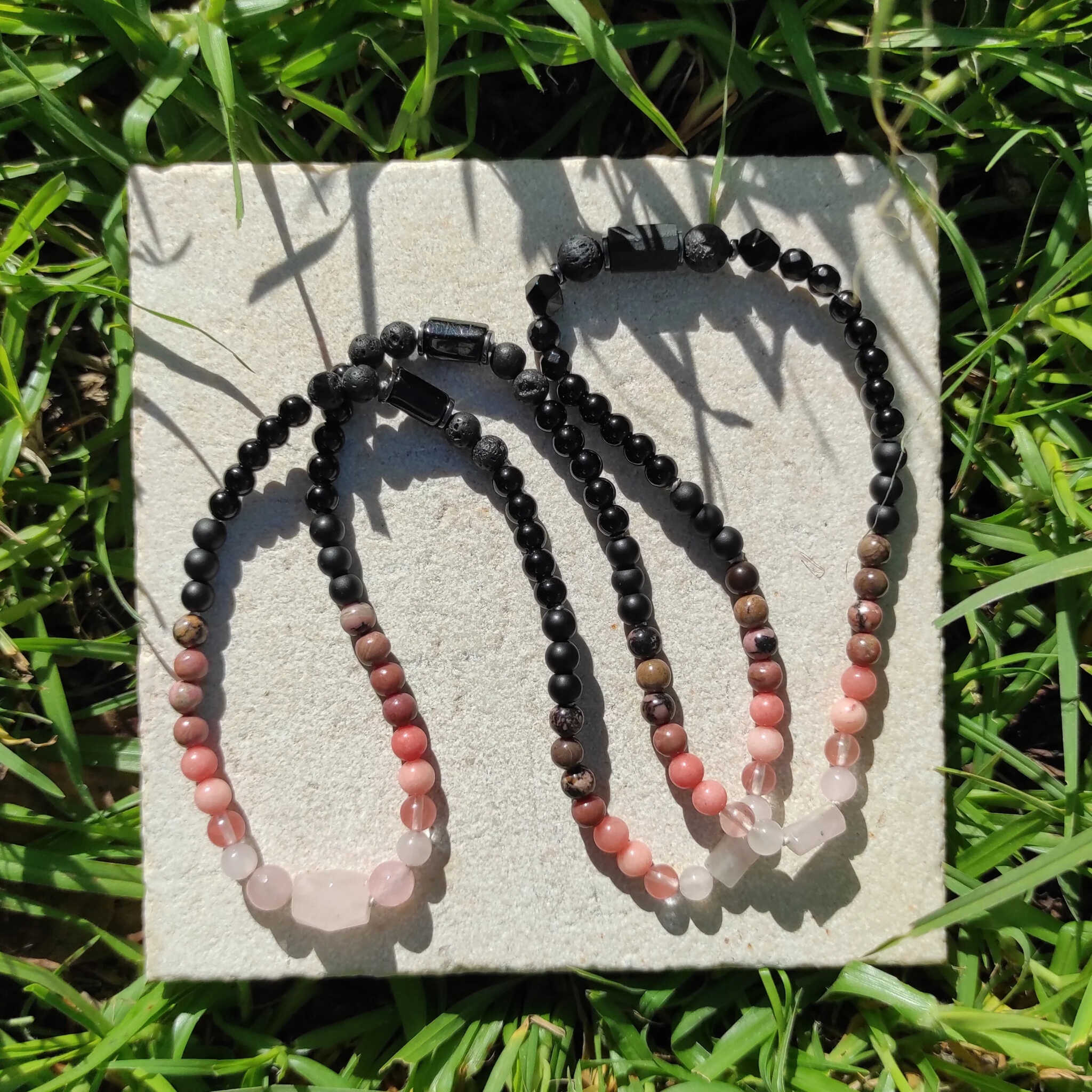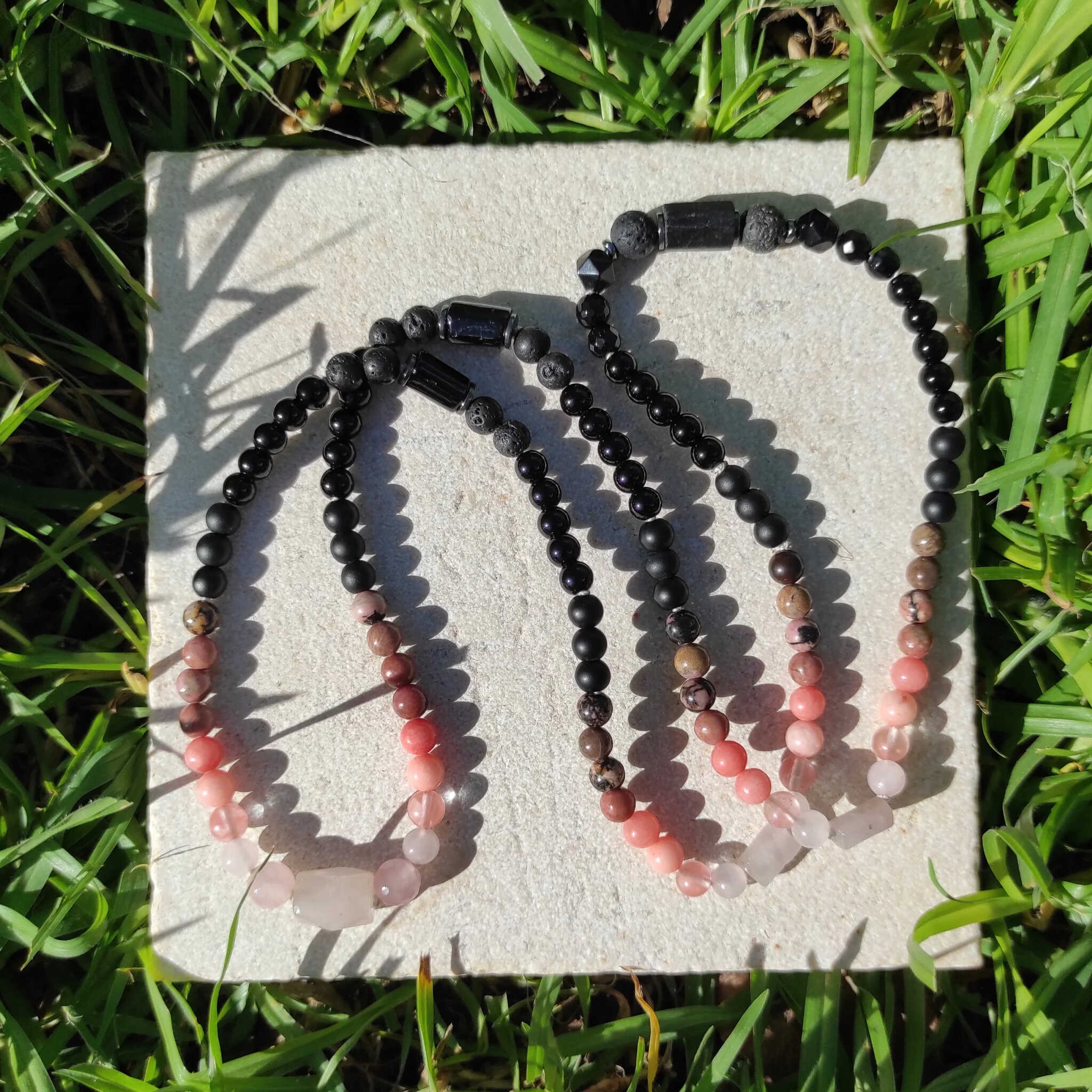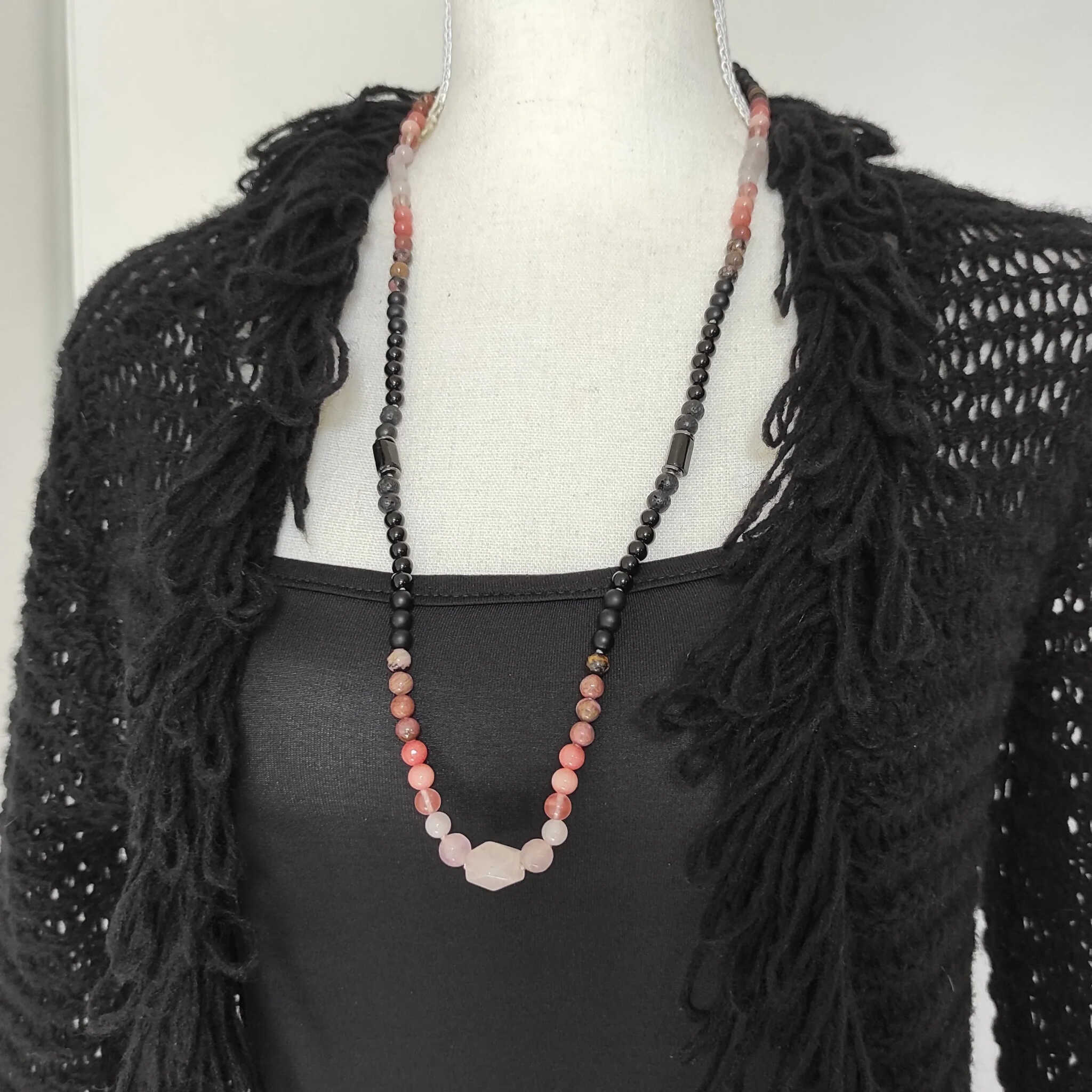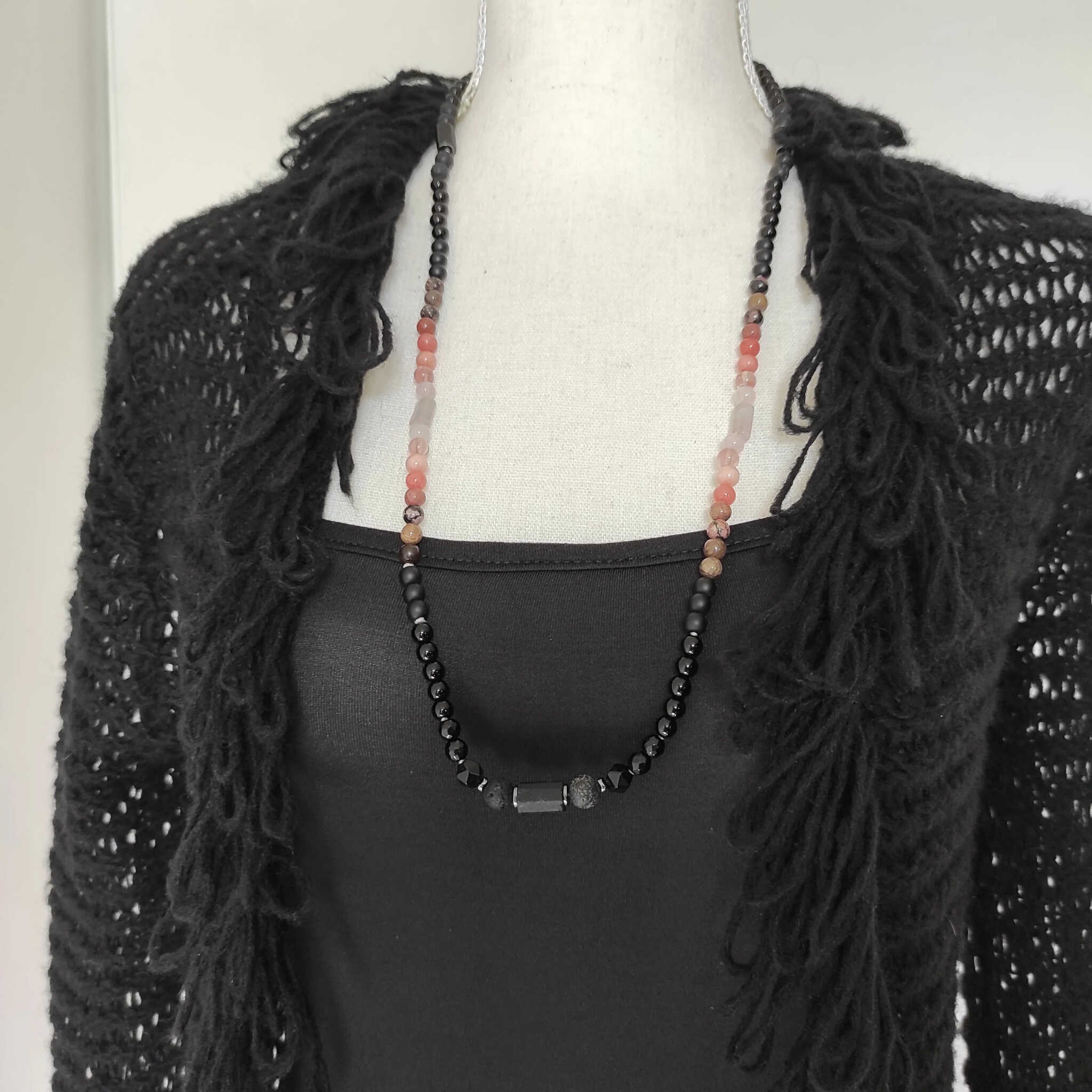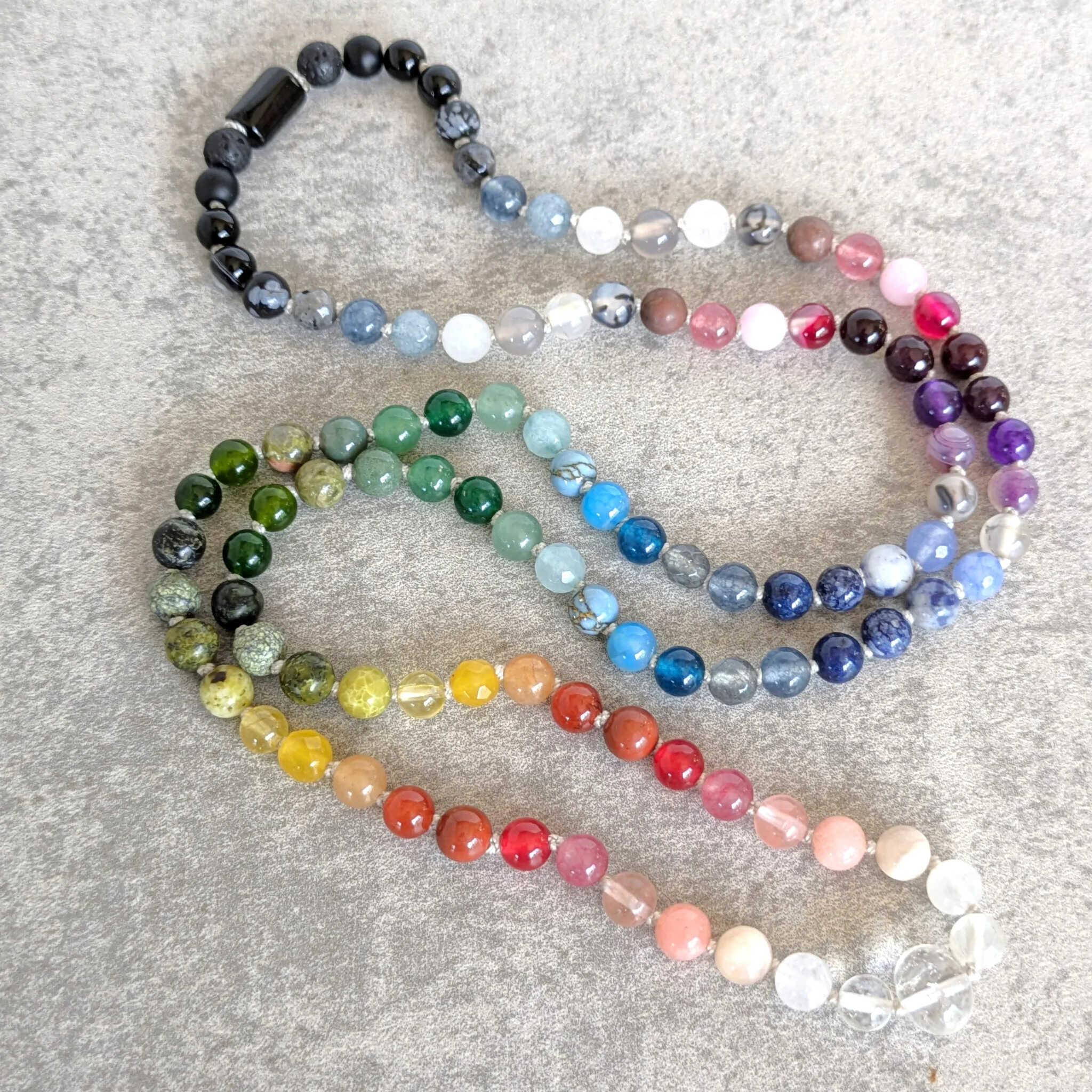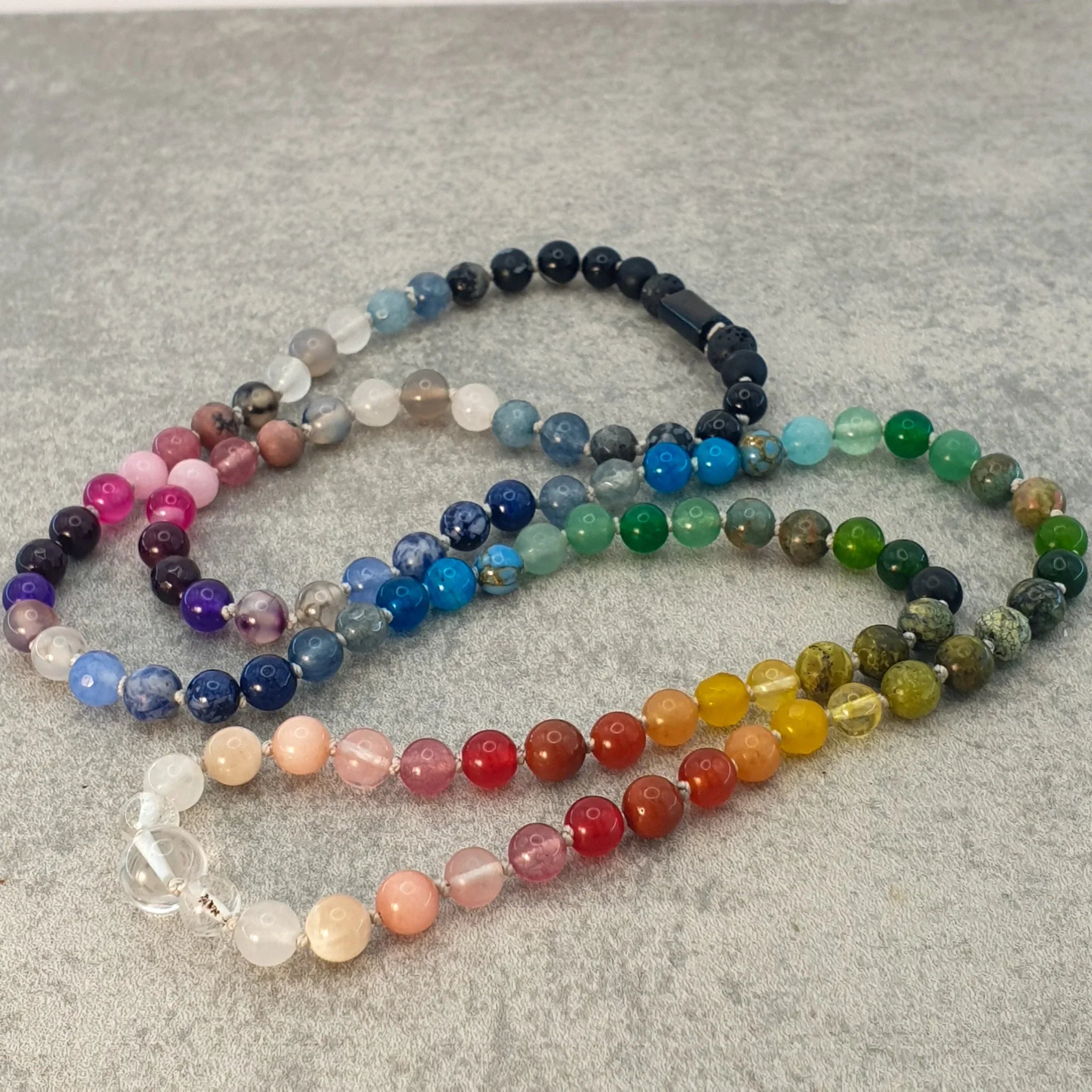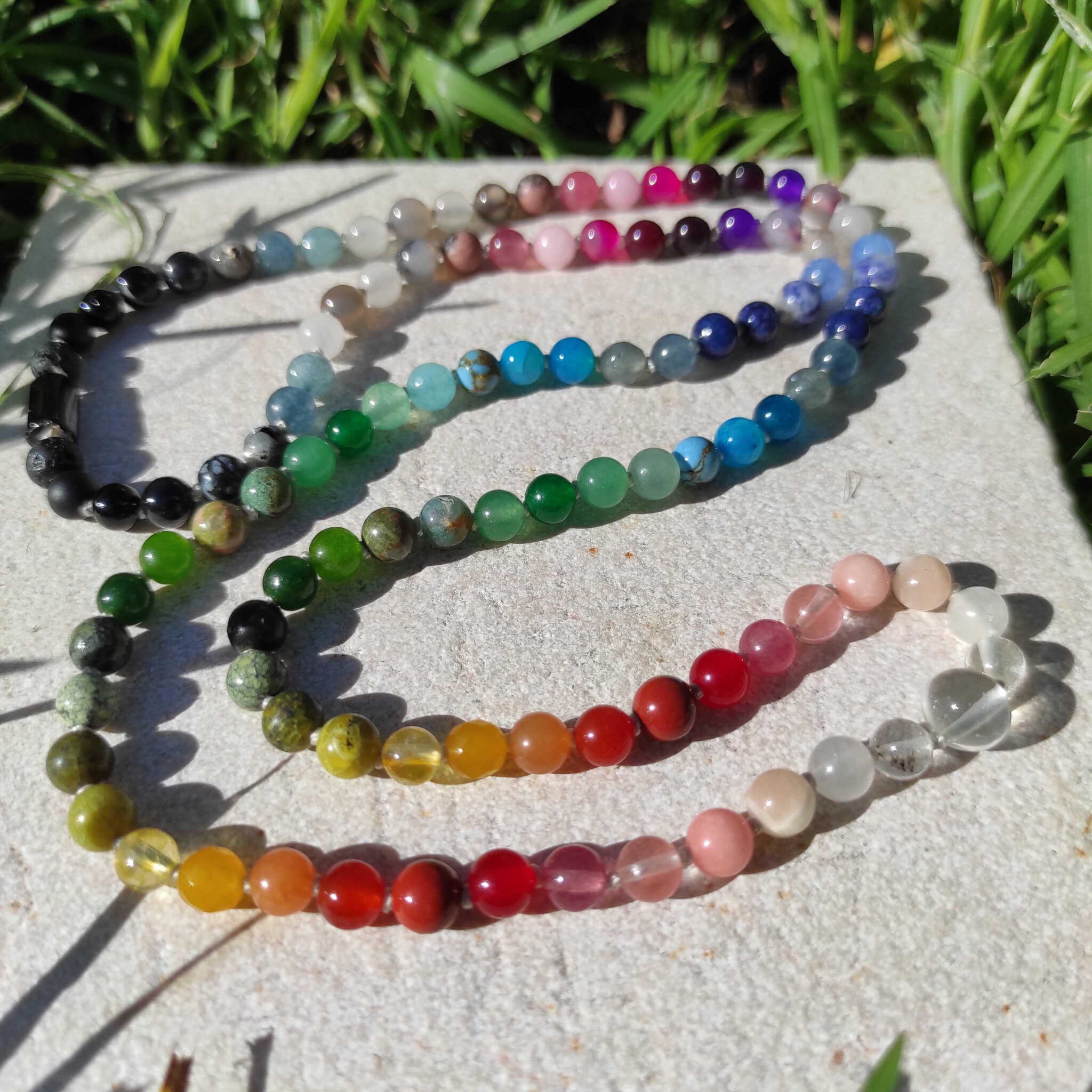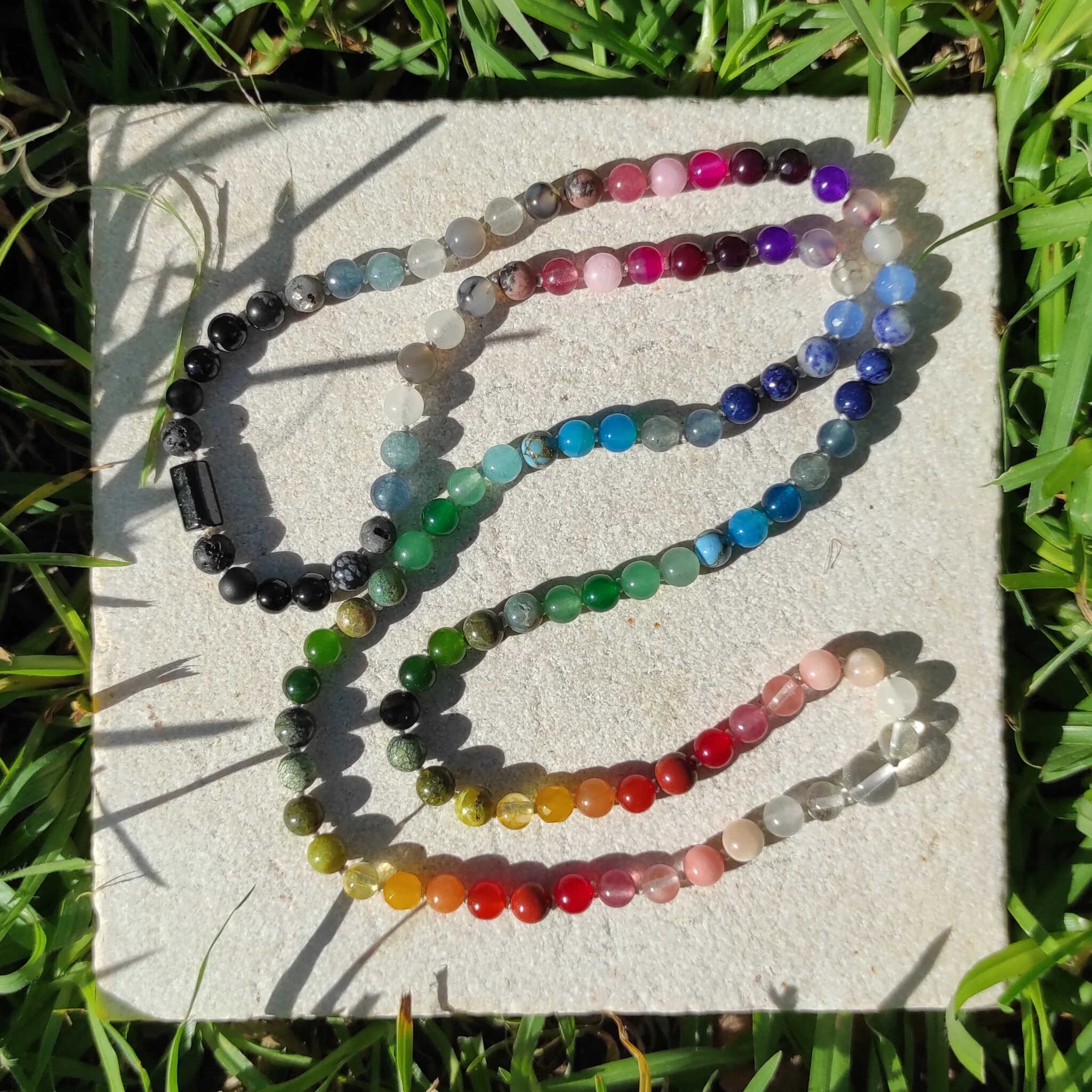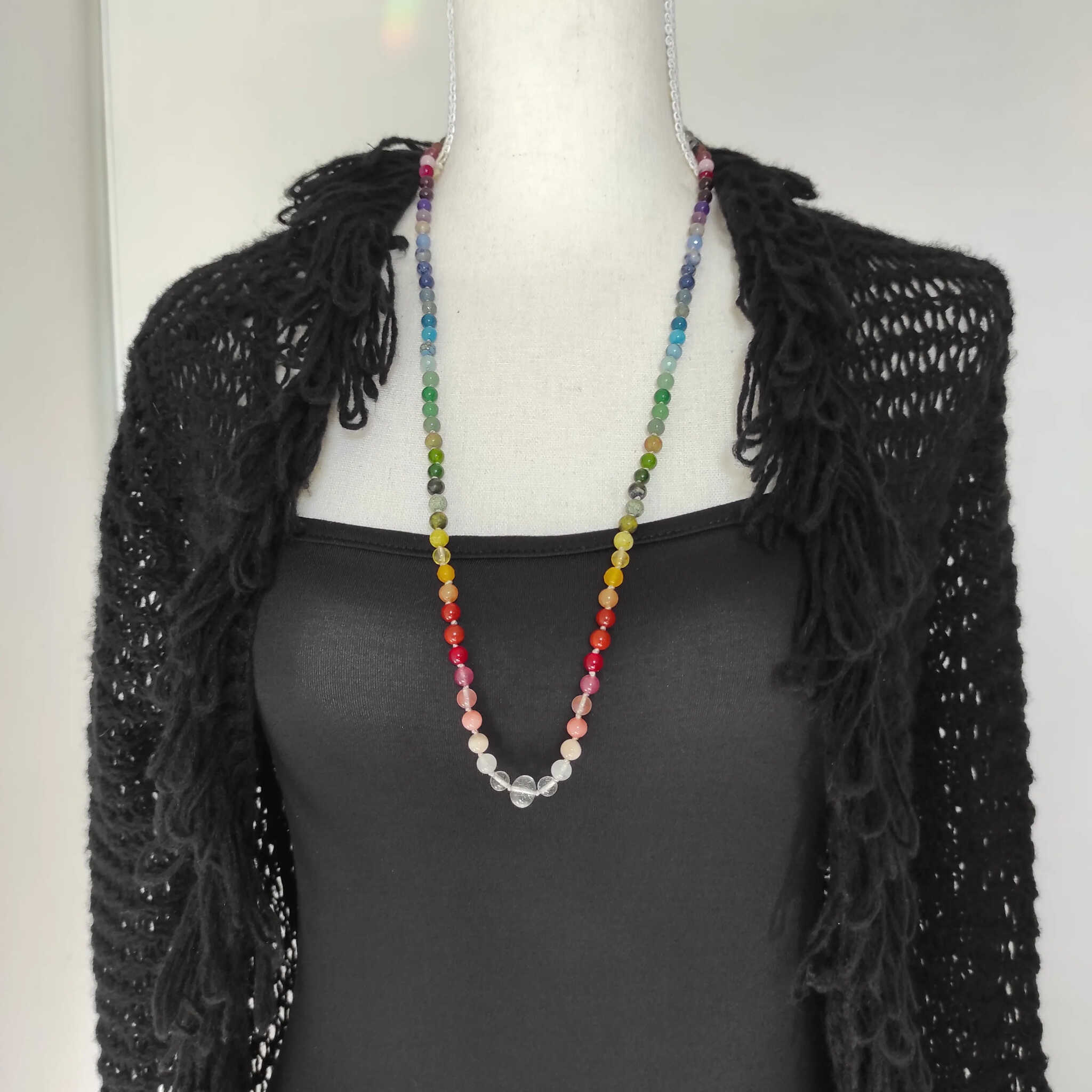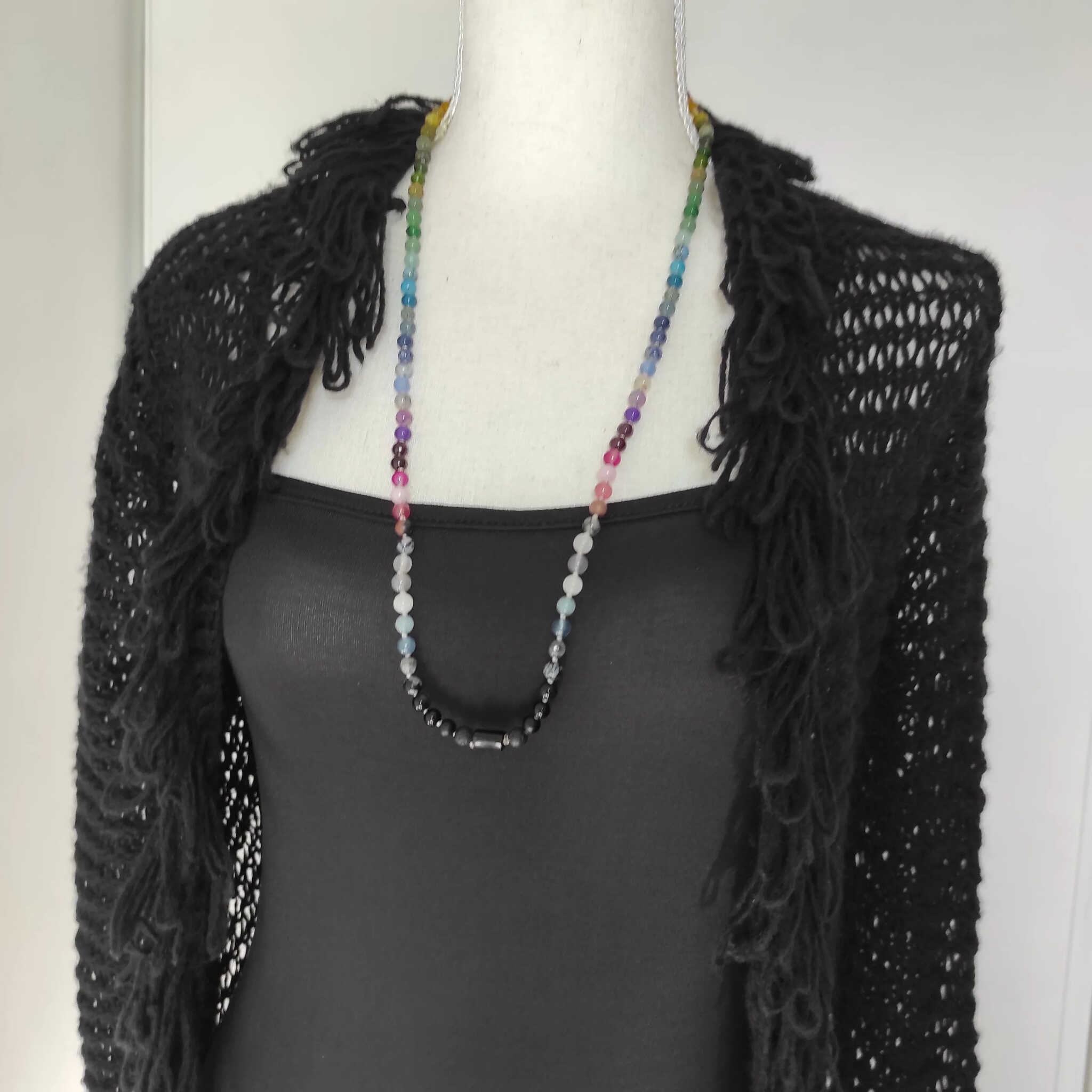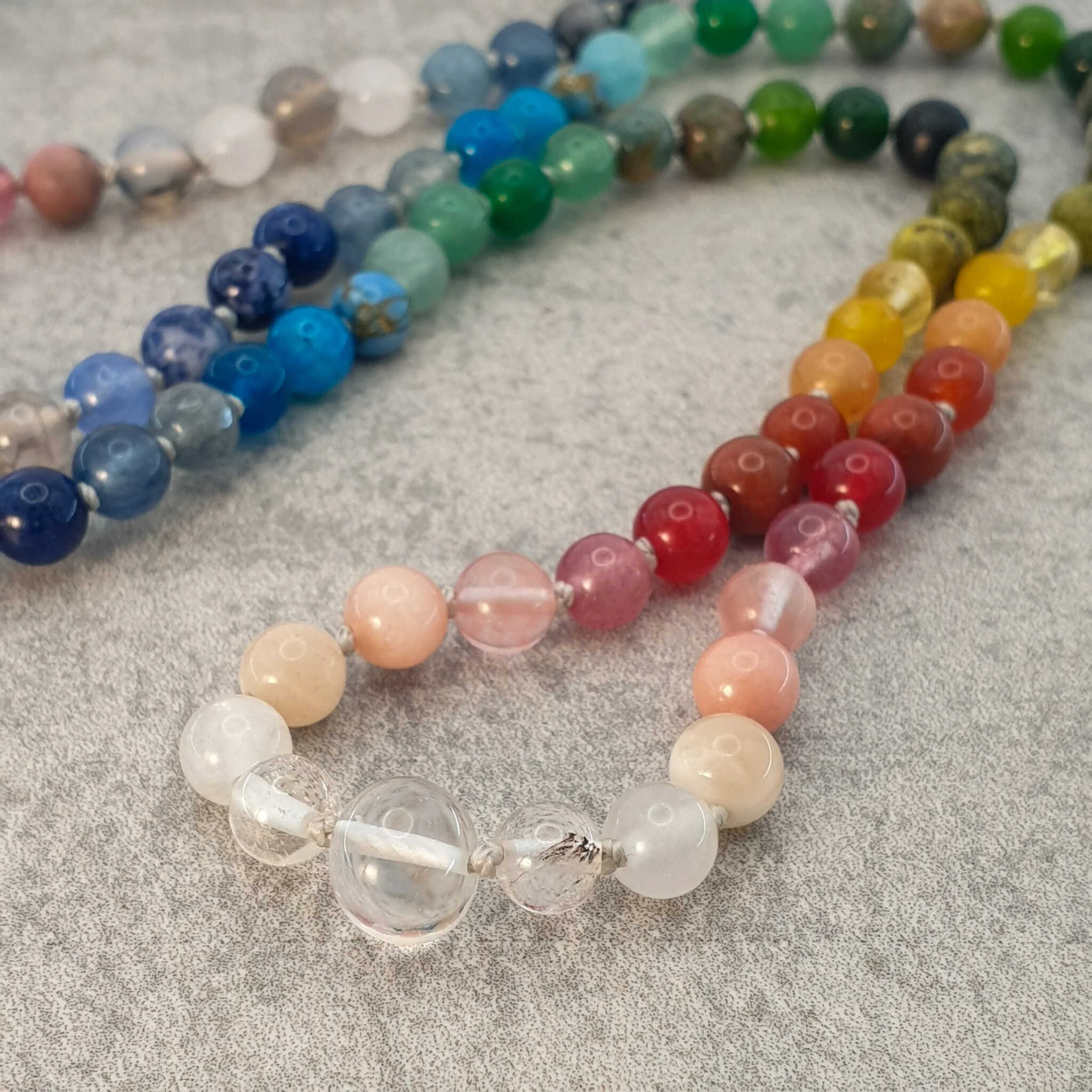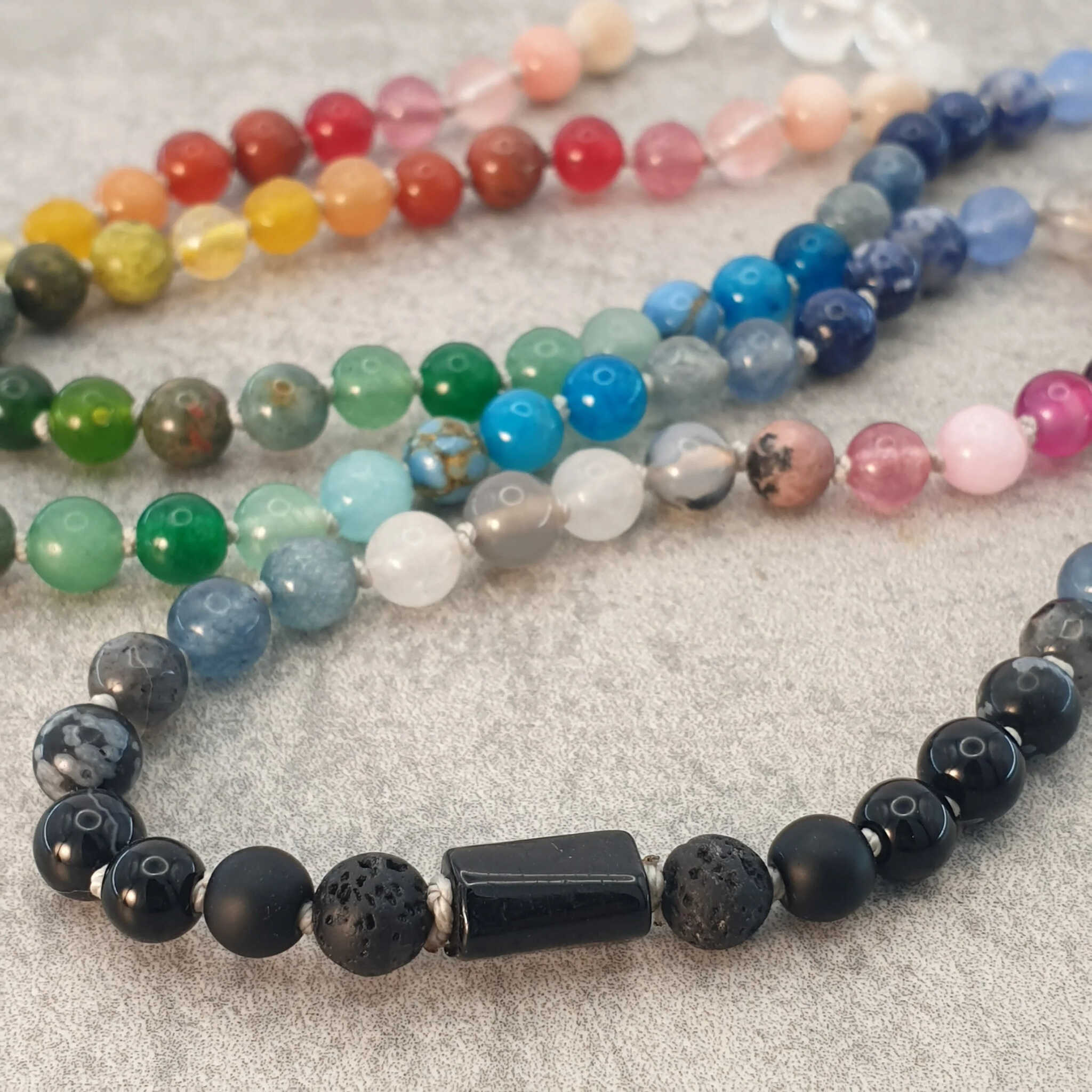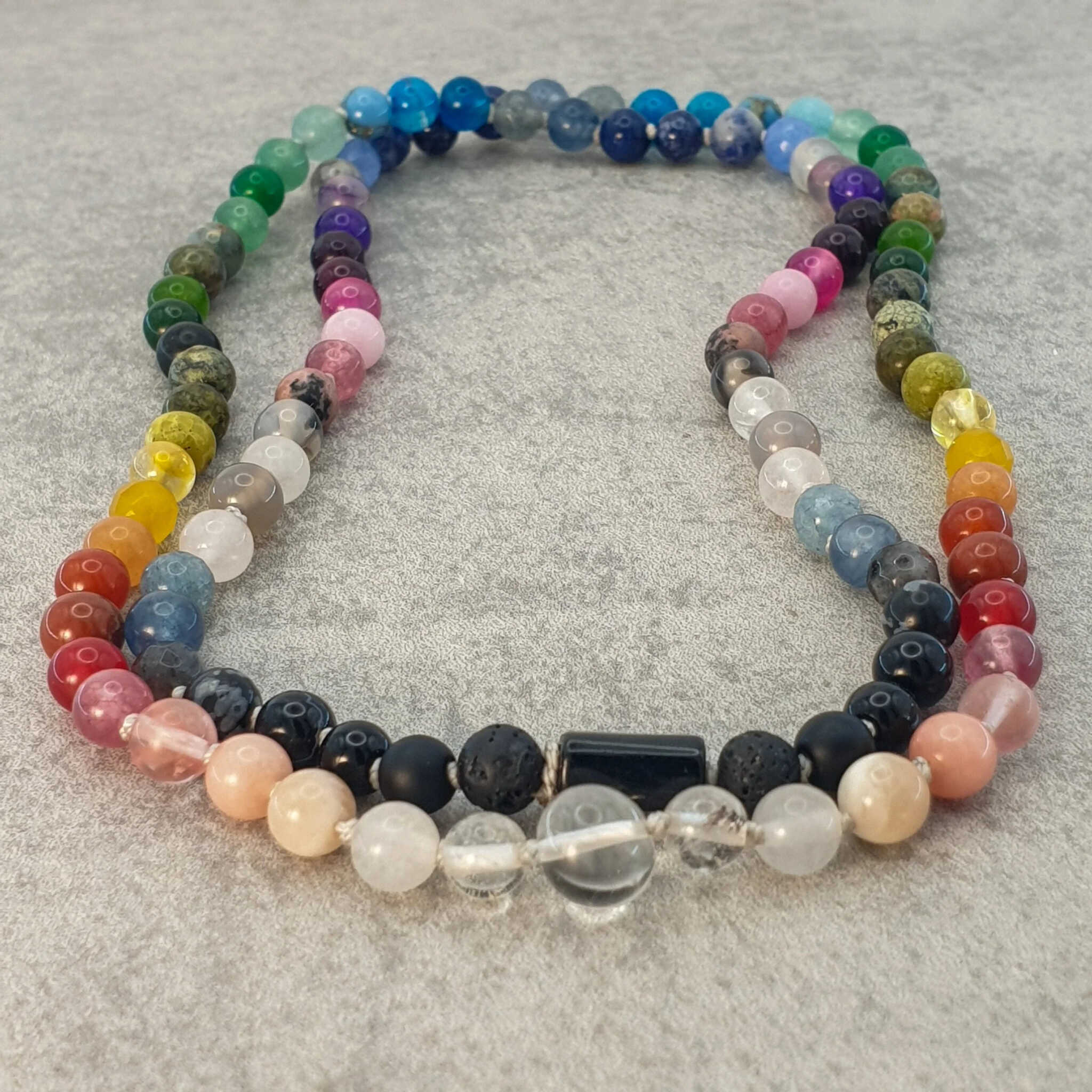
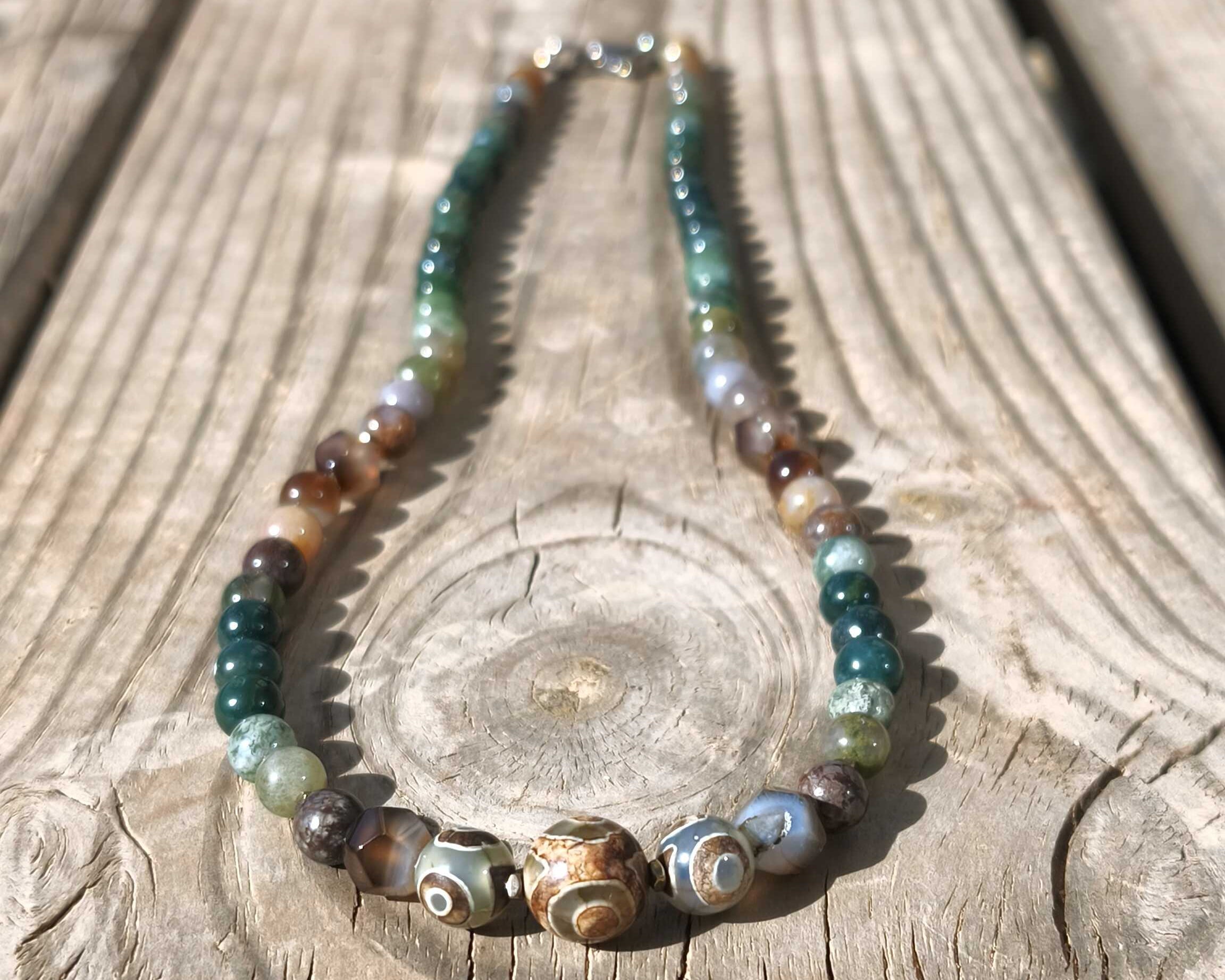
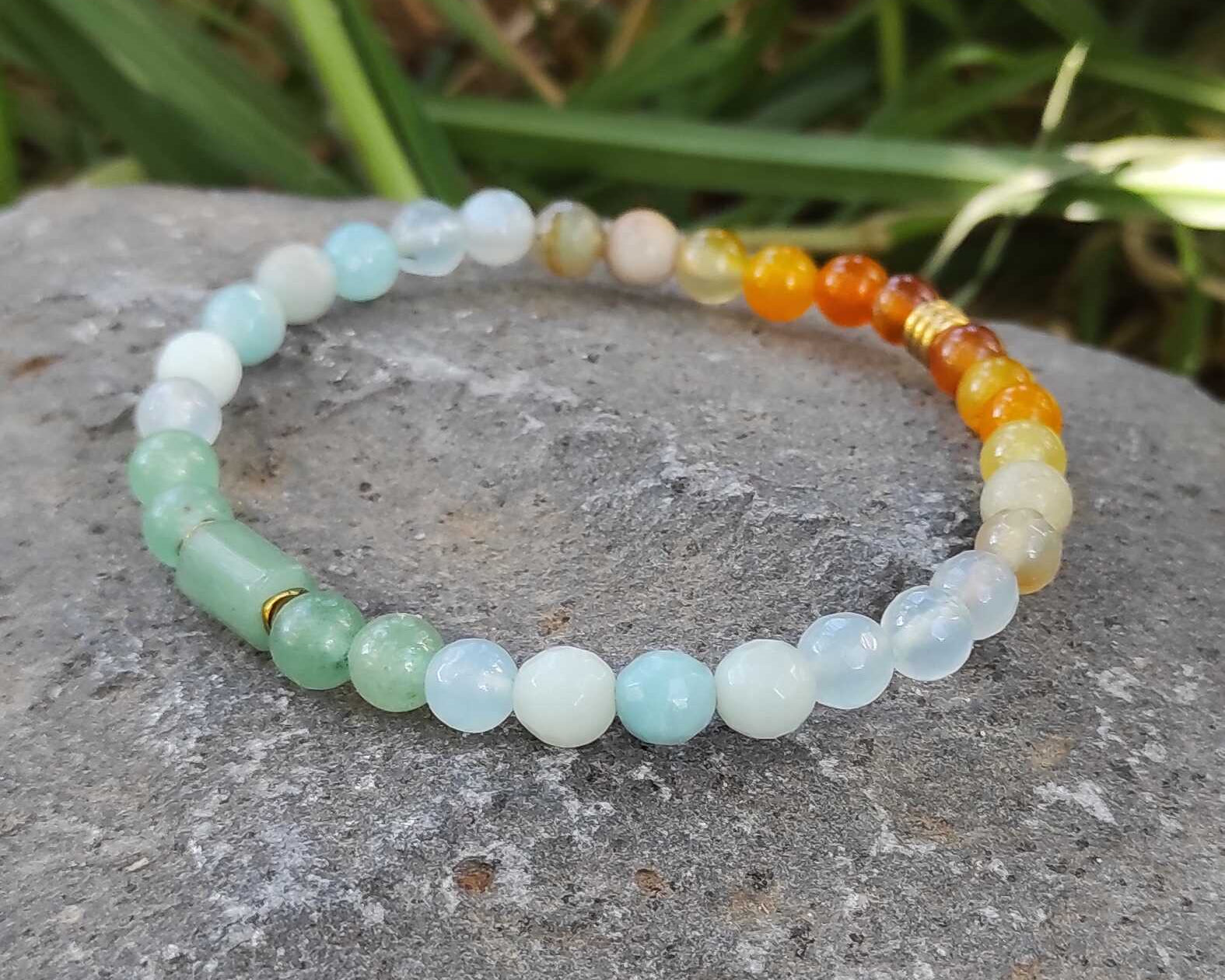

A mala necklace, consisting of 108 beads, is an ancient tool for meditation and mindfulness.
It is used for practicing breathing, mantra, and attention, and is considered one of the primary tools in yoga traditions.
"Mala" (माला) in Sanskrit means a prayer garland, like a rosary in Christianity or a misbaha in Islam, designed to keep track of repetitions of a mantra, prayer, or breath.
Why exactly 108 beads?
There is no single historically agreed-upon explanation; there are several interpretations according to tradition.
• Buddhism - Connection to consciousness: 108 mental states that create emotional burden that obscures consciousness (such as desire, rejection, confusion). The process of counting and moving from bead to bead releases consciousness.
• Hinduism: The number 108 appears in texts and practices, in the number of mantra repetitions.
• Astronomy, cosmic order: The sun's diameter is approximately 108 times the Earth's diameter, and the distance between the Earth and the Moon is approximately 108 times the Moon's diameter (approximately, depending on the exact position in the elliptical orbit, just interesting information...).
The Anatomy of a Mala Necklace
A classic mala consists of 108 beads, with three basic components:
1. Guru Bead: The 109th, larger bead, symbolizing the inner teacher or higher self. It serves as an anchoring point, marking the beginning and the end.
2. Tassel: Symbolizes the lotus flower and the connection between all threads of consciousness that converge into one.
3. Stringing: Hand-stringing with a delicate knot between each bead symbolizes the connection between individual consciousness and universal energy, and from a practical aspect - ensures that the necklace remains without a uniform standard. Mala varies between traditions, regions, and practice styles.
Types of Malas and Their Differences
• Indian or Yogic Mala (the most common) - 108 beads + a guru bead, without fixed divisions, with an emphasis on a continuous flow of practice.
• Tibetan Mala (Buddhist) – divided into sub-groups (usually 27 × 4 = 108) with dividers (counter marks), it is said to be more practical, helping to focus without losing concentration.
• There are also Zen malas, with divisions between 7-14-33, and shorter versions like 54 and 27 beads.
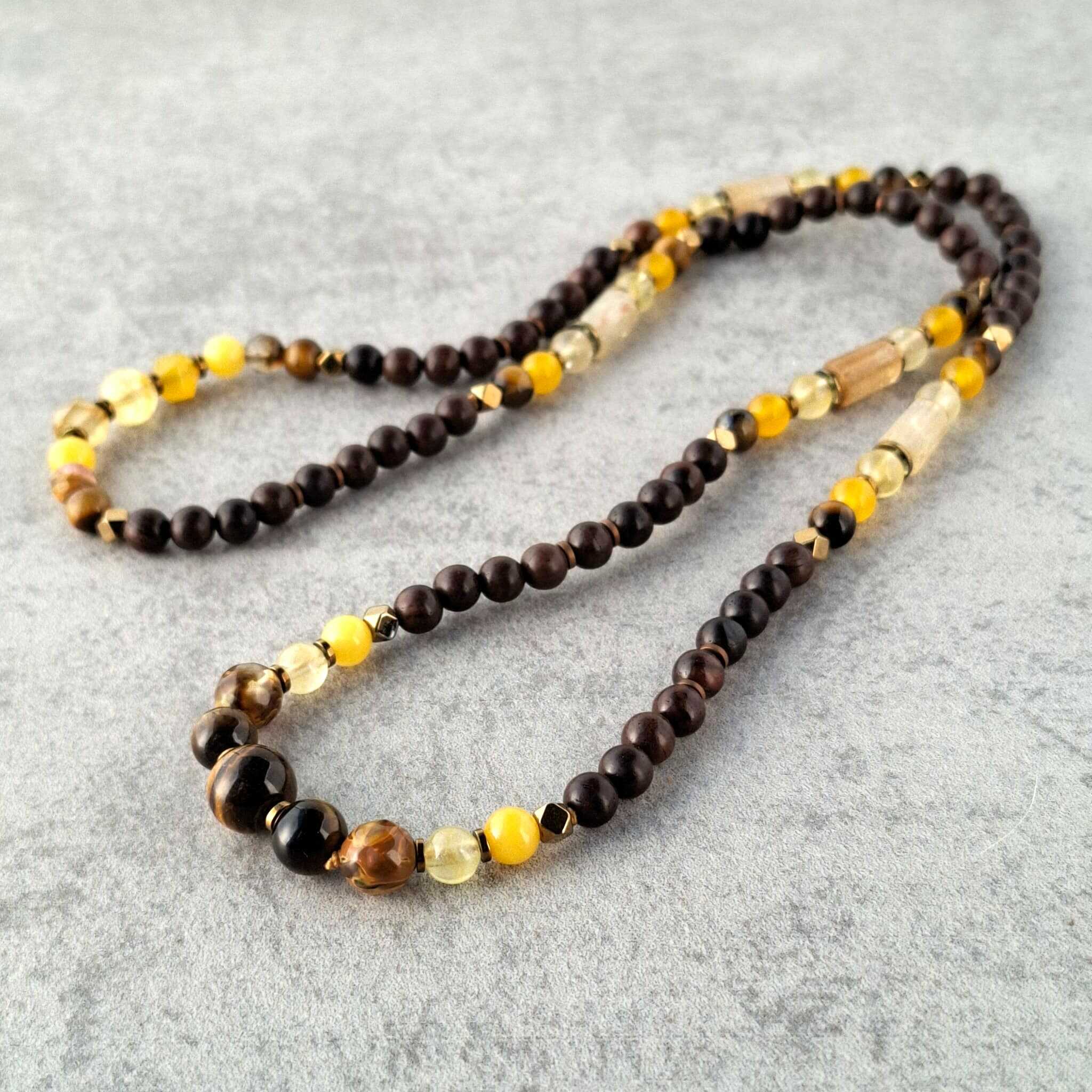
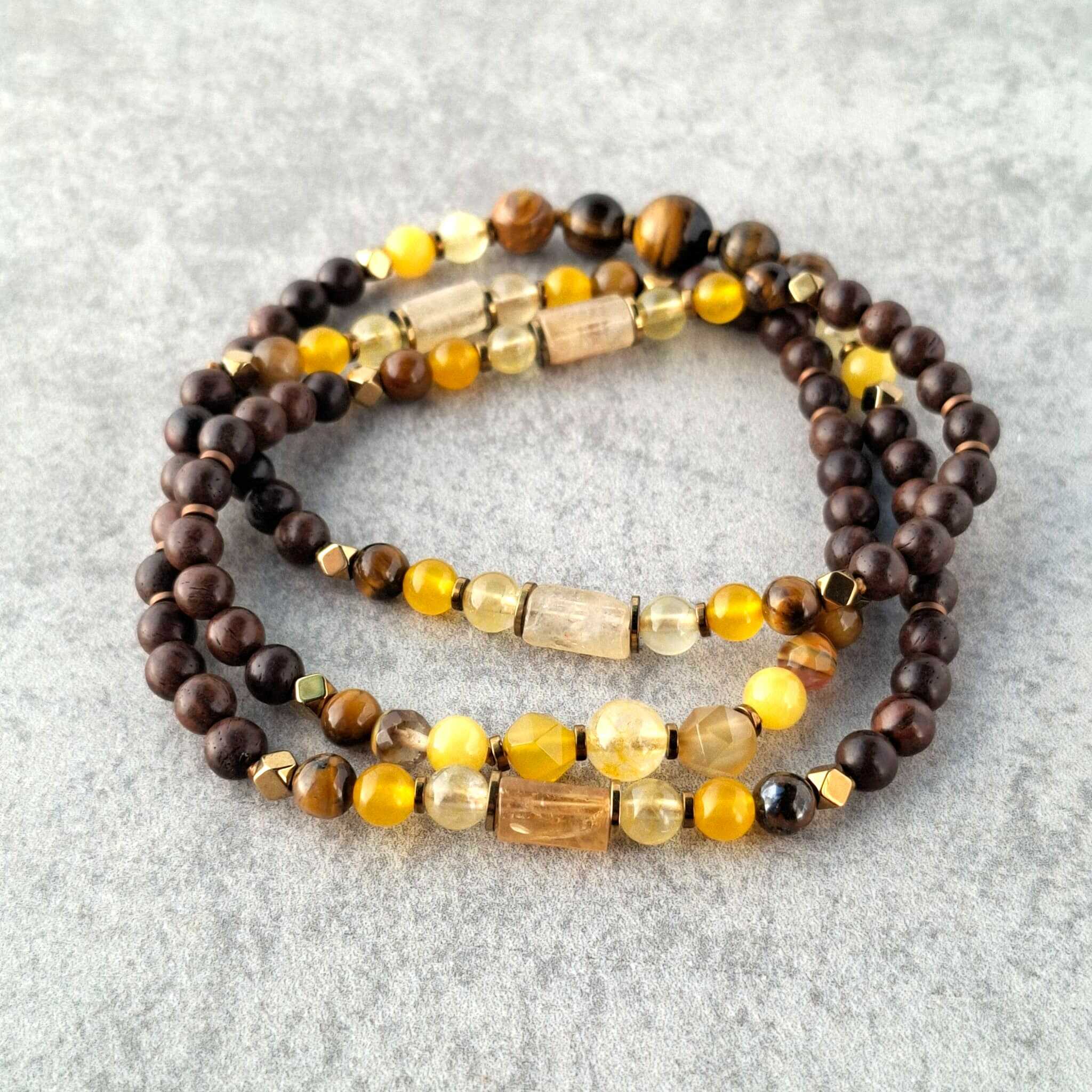
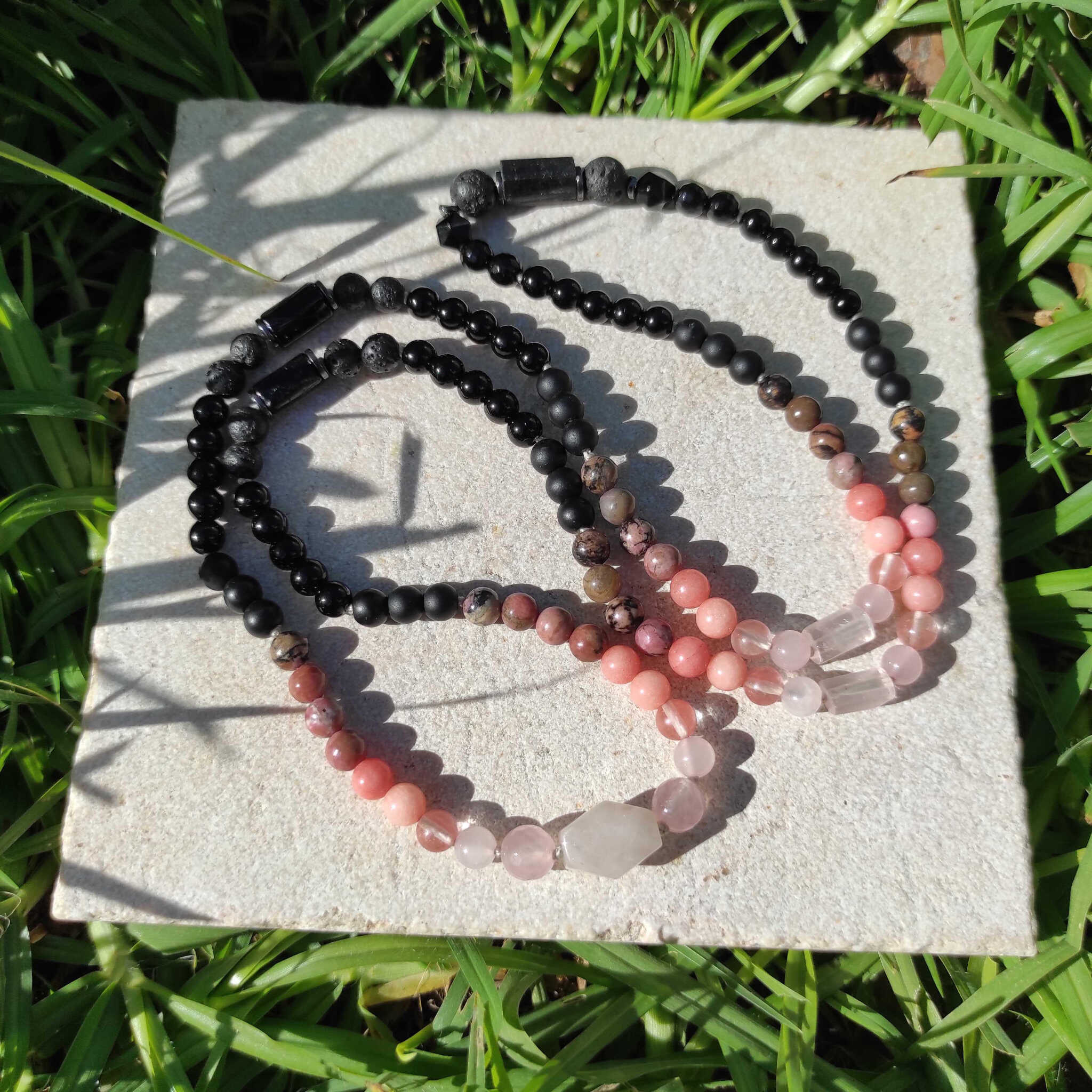
• And there are also mala-style necklaces, which are more interesting, colorful, and balanced, and still have a precise structure and a meaningful number of beads, such as the Fibonacci sequence, the golden ratio which also appears in nature (1-2-3-5-8-13).
How to Use a Mala Necklace?
Hold it in your dominant hand, each bead = a breath / word / mantra, pass it between your fingers, progress at a natural pace. When you reach the guru bead, stop and breathe, and you can repeat.
Does it work?
A combination of repetitive motion, mental focus, physical touch, and breathing rhythm reduces stress, brings back focus, calms thoughts and all body systems.
No experience needed. Just start.
To view the Mala collection and connect to your energy
Mala is still used today as a tool for practicing meditation, breathing, and mindfulness in various traditions around the world.